
Born in Mayfair, London, in April 1926, the young royal entered a world completely unaware of the historic destiny awaiting her. As the first child of the Duke and Duchess of York, her early years were characterized by a quiet aristocratic upbringing far removed from direct governance. Nobody anticipated that this thoughtful young girl would eventually ascend to global prominence, steering a vast empire through turbulent modern eras. Her grandfather King George V held the throne, and her family enjoyed a relatively peaceful existence until sudden dynastic shifts altered their trajectory forever, setting the foundation for the remarkable life of Queen Elizabeth II.
Quick Bio
| Attribute | Detail |
| Full Name | Elizabeth Alexandra Mary |
| Birth Date | April 21, 1926 |
| Ascension | February 6, 1952 |
| Spouse | Prince Philip |
| Passing | September 8, 2022 |
Early Childhood and Upbringing
Growing up alongside her younger sister Princess Margaret, the young princess experienced a sheltered domestic environment structured by private tutors. Education focused heavily on constitutional history, law, and languages, preparing her discreetly for potential public roles without placing undue pressure on her shoulders. Queen Elizabeth II absorbed lessons in resilience and duty from her mother, who emphasized grace under pressure during family gatherings at various countryside estates across the United Kingdom.
The Abdication Crisis

Everything changed dramatically in 1936 when her uncle King Edward VIII chose to abdicate the throne in order to marry Wallis Simpson. This unexpected political crisis thrust her father into kingship as King George VI, instantly transforming young Elizabeth into the heir presumptive. Queen Elizabeth II faced an entirely new future overnight, shifting from a minor royal background into the direct line of succession for the British crown.
World War II and Public Service
During the dark days of the Second World War, the teenage princess demonstrated immense courage by remaining resilient through intense aerial bombings of London. She made her historic first radio broadcast addressing evacuated children, offering comforting words of hope and solidarity. Queen Elizabeth II later joined the Auxiliary Territorial Service, training actively as a mechanic and truck driver, which showcased her deep commitment to national service and solidarity with ordinary citizens.
Post-War Romance and Marriage

Romance blossomed during these formative years when she reconnected with Lieutenant Philip Mountbatten, a naval officer with deep European royal ties. Following a carefully managed courtship, their wedding took place at Westminster Abbey in November 1947, capturing the public imagination during a post-war economic recovery. Queen Elizabeth II built a steadfast partnership with Prince Philip, who remained her closest confidant and primary pillar of strength throughout seven decades of intense public scrutiny.
The Sudden Ascent to the Throne
While touring Kenya representing her ailing father in February 1952, tragic news arrived regarding the sudden death of King George VI. At just twenty-five years of age, the grieving princess learned of her immediate accession to the highest office. Queen Elizabeth II returned swiftly to British soil as sovereign, stepping off the aircraft already bearing the immense weight of crown responsibilities and constitutional leadership.
The Historic Coronation Ceremony
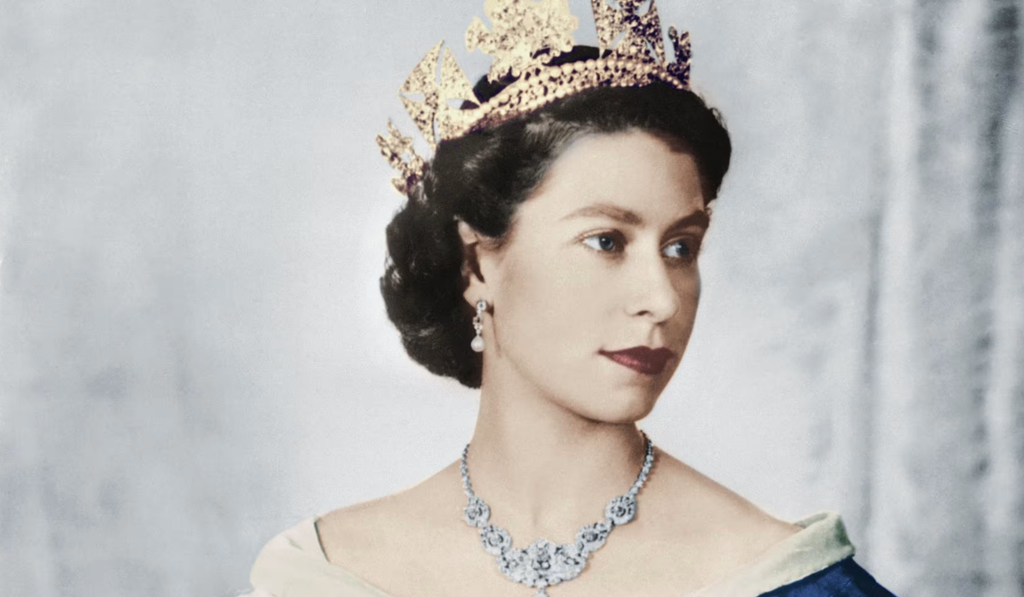
Sumptuous pageantry filled Westminster Abbey in June 1953 as millions gathered to witness the formal crowning of the new monarch. Breaking traditional boundaries, the entire service was broadcast live on television for the first time, allowing global audiences to participate in the ancient ritual. Queen Elizabeth II inaugurated a modern era of media engagement, transforming royal visibility while preserving the solemn mystique of historical traditions.
Navigating the Commonwealth Realms
Her early reign coincided with massive geopolitical shifts, including the gradual dismantling of the British Empire and the formation of the modern Commonwealth. She undertook exhausting international tours to maintain diplomatic ties across diverse continents and newly independent nations. Queen Elizabeth II acted as a unifying anchor, bridging cultural divides and fostering international cooperation through persistent diplomacy and respectful personal engagement with world leaders.
Balancing Family and Crown
Managing a growing family of four children—Charles, Anne, Andrew, and Edward—proved uniquely challenging alongside rigorous official duties. Private domestic trials frequently intersected with public expectations, creating persistent media interest in royal affairs. Queen Elizabeth II maintained her characteristic stoicism, weathering personal storms with quiet dignity while striving to protect the institutional integrity of the monarchy.
The Difficult Year of Troubles
The year 1992 brought severe personal and structural trials, famously described by the monarch as her annus horribilis due to multiple royal divorces and a devastating fire at Windsor Castle. Public criticism intensified regarding transparency, royal taxation, and institutional relevance in a rapidly democratizing society. Queen Elizabeth II responded by adapting financial structures and opening royal residences to tourism, proving her willingness to modernize traditional operations under intense public pressure.
Enduring National Grief in 1997
Public sentiment reached a critical juncture following the tragic death of Diana, Princess of Wales, in late 1997, which sparked nationwide grief and temporary friction with royal protocols. Recognizing the emotional depth of the public mood, the sovereign delivered a rare live television broadcast expressing personal sorrow and admiration. Queen Elizabeth II successfully realigned her approach to match national mourning, restoring public trust and healing fractures between the palace and citizens.
Golden and Diamond Jubilees
Milestone celebrations marked half a century and later sixty years on the throne, drawing millions of enthusiastic well-wishers into central London streets during massive jubilee festivals. These national festivities celebrated unprecedented longevity and consistent public service across generations of political change. Queen Elizabeth II expressed profound gratitude during these historic events, emphasizing that her life remained wholly dedicated to the continuous service of her people.
A Stabilizing Global Presence
Throughout her reign, she met fourteen United States presidents and countless international figures, serving as a constant human bridge across shifting political landscapes. Her weekly meetings with successive British prime ministers provided confidential counsel built on decades of institutional memory. Queen Elizabeth II mastered the art of political neutrality, offering quiet stability and wise perspective through every domestic crisis and international transition.
The Loss of Her Lifelong Companion
The passing of Prince Philip in April 2021 marked a profound personal loss, occurring amidst pandemic restrictions that forced her to sit alone during funeral services. Images of her solitary figure touched global hearts, highlighting her immense personal fortitude during deeply painful private grief. Queen Elizabeth II continued her constitutional duties shortly afterward, demonstrating unwavering commitment to her oath despite enduring advanced age and personal heartbreak.
Reaching Platinum Status
Marking seventy years on the throne in 2022, she became the first British monarch to achieve a Platinum Jubilee, celebrating an astonishing milestone of continuous duty. Global tributes poured in from every corner of the earth, honoring her historic dedication to constitutional principles. Queen Elizabeth II appeared on the Buckingham Palace balcony to wave appreciatively at cheering crowds, embodying an irreplaceable symbol of continuity.
Final Days at Balmoral
True to her lifelong work ethic, she formally appointed Liz Truss as prime minister at Balmoral Castle just two days prior to her passing. Her physical strength finally waned, but her mental clarity and devotion remained intact until her peaceful final moments in Scotland. Queen Elizabeth II passed away on September 8, 2022, closing a monumental chapter in British and world history.
Global Mourning and State Funeral
An unprecedented wave of national mourning followed, with millions queuing for hours in London to pay their final respects during her lying-in-state. Dignitaries from across the globe gathered for a solemn state funeral at Westminster Abbey, celebrating a legacy defined by extraordinary endurance. Queen Elizabeth II left behind an indelible mark on international diplomacy, community spirit, and the enduring concept of constitutional duty.
Transition to a New Era
Following her passing, her eldest son immediately acceded to the throne as King Charles III, initiating a seamless transition for the British monarchy. The institutional structures she carefully nurtured adapted smoothly to the new royal household. Queen Elizabeth II established a high benchmark for modern leadership, ensuring the crown retained its cultural significance and structural stability into the twenty-first century.
Historical Evaluation of Her Reign
Historians frequently praise her unmatched ability to adapt ancient customs to contemporary values without losing historical continuity. Her reign bridged the gap between the post-imperial twentieth century and the digital age with remarkable grace. Queen Elizabeth II secured a permanent place in global history as an exemplar of selfless public service, leaving a legacy that will be studied and admired for generations.
The Lasting Memory
Memories of her quiet strength, colorful attire, and unwavering dedication remain deeply embedded in the collective consciousness of the Commonwealth nations. Her lifetime commitment serves as a defining blueprint for modern leadership and institutional resilience. Queen Elizabeth II remains forever remembered as a pillar of grace, dignity, and stability in an ever-changing world.
FAQs
- When was Queen Elizabeth II born?
- She was born on April 21, 1926.
- How long did Queen Elizabeth II reign?
- Her reign lasted for 70 years and 214 days.
- Who was the husband of Queen Elizabeth II?
- She was married to Prince Philip.
- When did Queen Elizabeth II pass away?
- She passed away on September 8, 2022.
- Who succeeded Queen Elizabeth II?
- Her son King Charles III succeeded her.









[…] and mainstream motion pictures. Life in small towns instilled a deep appreciation for eccentric personalities and authentic human struggles, which became hallmarks of his signature storytelling style. Long […]