
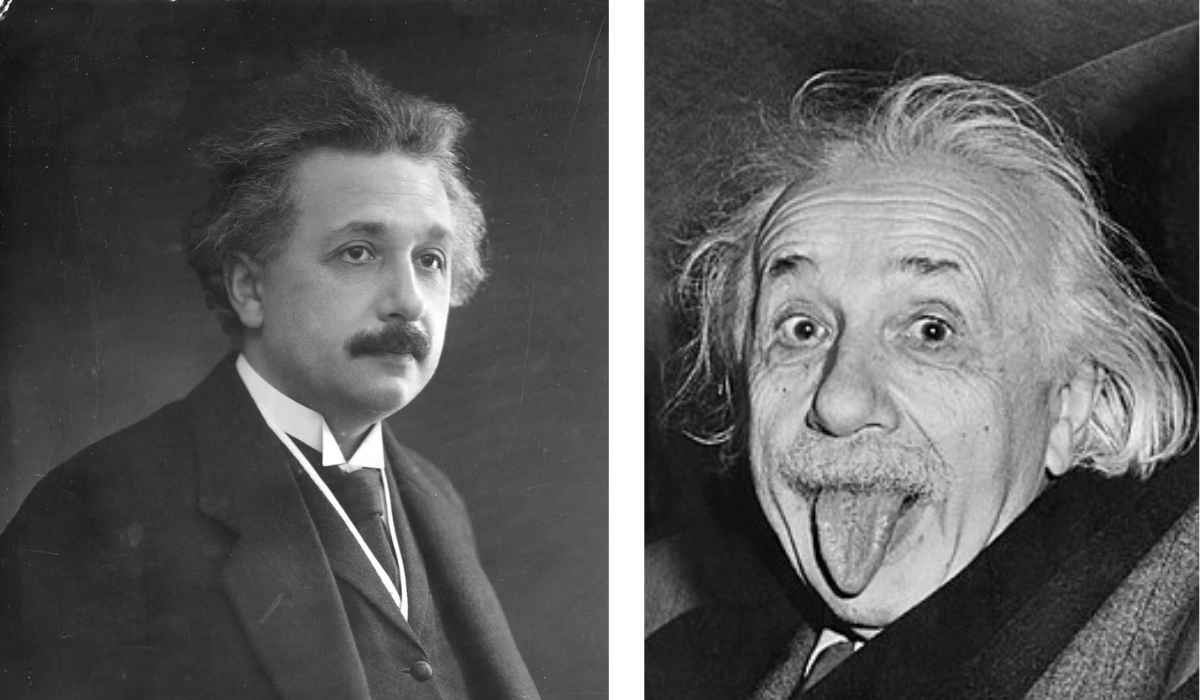
The extraordinary journey of Albert Einstein began in Germany, where a young inquisitive mind started questioning the fundamental nature of light, space, and time. His exceptional intellectual curiosity pushed boundaries across generations, fundamentally altering how humanity perceives the cosmos and physical reality. Long before achieving global renown, he struggled within rigid educational frameworks, preferring independent exploration of advanced mathematics and geometry. Overcoming numerous early obstacles.
He eventually secured a position at the Swiss Patent Office, a quiet environment that unexpectedly provided him with ample time to contemplate profound theoretical problems. The intellectual breakthroughs generated during his lifetime continue to influence modern technological advancements, theoretical physics research, philosophical inquiries, and educational curricula across the entire globe. His enduring cultural footprint remains unmatched, symbolizing pure genius, creativity, pacifism, and deep humanitarian dedication.
Quick Bio
| Attribute | Detail |
|---|---|
| Born | March 14, 1879, Ulm, Germany |
| Died | April 18, 1955, Princeton, New Jersey |
| Key Theories | Special and General Relativity |
| Famous Equation | E=mc2 |
| Nobel Prize | Physics, 1921 (Photoelectric Effect) |
Early Beginnings in Ulm and Germany
Born in the quiet southern German city of Ulm during March 1879, Albert Einstein entered a middle-class secular Jewish family that valued engineering and commerce. During his very early childhood years, relatives grew concerned because he exhibited a notable delay in learning how to speak fluently. Despite these initial developmental hurdles, young Albert displayed an innate fascination with mechanical puzzles and geometric shapes long before entering formal schooling. A pocket compass given by his father during a period of illness triggered a lifelong obsession with invisible magnetic and physical forces. These formative experiences laid the cognitive groundwork necessary for a future theoretical physicist destined to reshape human understanding of the natural universe.
Childhood Curiosity and Educational Struggles
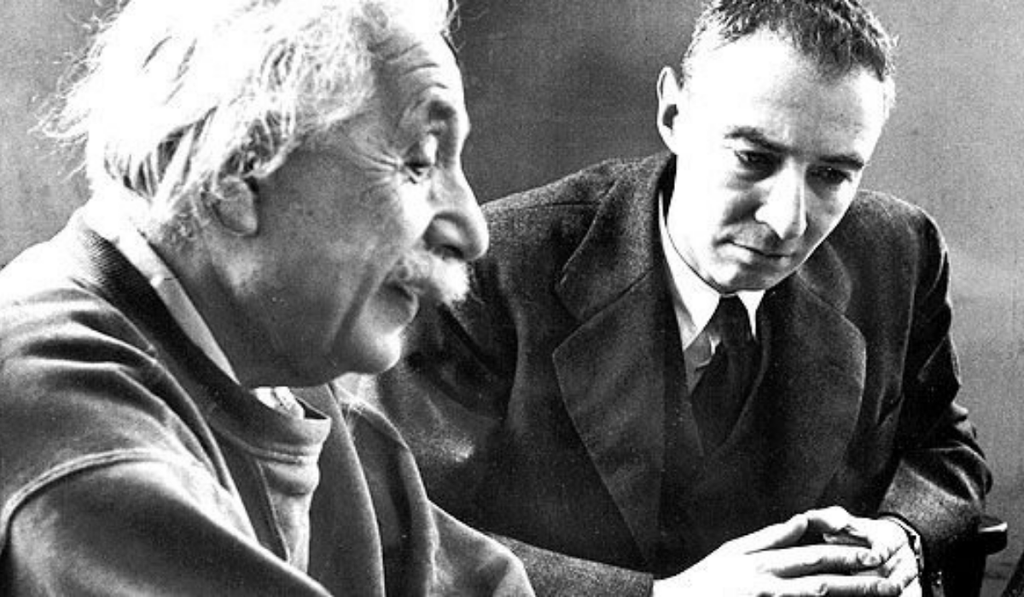
The rigid, authoritarian teaching methods enforced within traditional German gymnasiums deeply stifled the creative instincts of young Albert Einstein. Instructors frequently criticized his daydreaming behavior and independent questioning, assuming such traits indicated a lack of academic potential. Rather than yielding to rote memorization, he dedicated his personal time to mastering advanced algebra, calculus, and Euclidean geometry entirely on his own. By the tender age of twelve, he had independently formulated an original proof demonstrating the core principles of the Pythagorean theorem. This profound self-reliance transformed typical adolescent struggles into extraordinary intellectual strengths that propelled him far ahead of his school peers.
Moving to Switzerland and Academic Growth
Relocating to Switzerland offered Albert Einstein a liberating educational atmosphere that welcomed alternative viewpoints and fostered genuine scientific inquiry. He enrolled at the prestigious Swiss Federal Polytechnic School in Zurich, where he refined his mathematical capabilities and deepened his comprehension of theoretical physics. Although he frequently skipped lectures to study original texts by classic physicists independently, he successfully earned his teaching diploma. Building close friendships with brilliant peers like Marcel Grossmann provided him with essential academic support during challenging financial moments. This transformative Swiss period nurtured his burgeoning scientific confidence, preparing him thoroughly for the groundbreaking theoretical breakthroughs that would soon emerge from his active mind.
The Patent Office Years in Bern
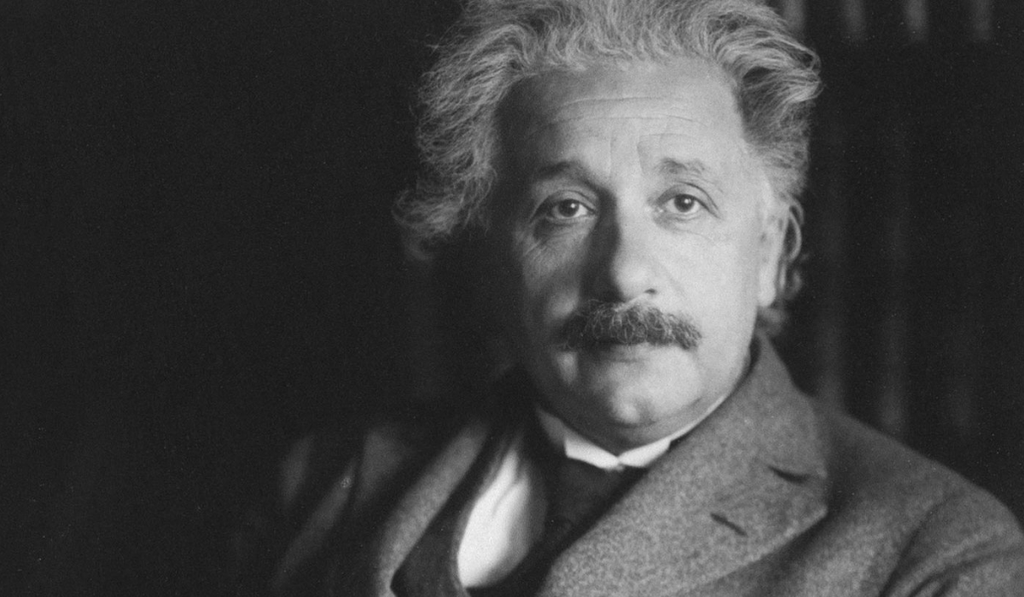
Securing a stable position as a technical assistant at the Swiss Patent Office in Bern provided Albert Einstein with unexpected intellectual freedom. Evaluating patent applications regarding electromagnetic synchronization devices allowed him to analyze complex technical designs efficiently during regular working hours. Leftover hours were quietly dedicated to contemplating deep cosmological mysteries, relativistic motion, and the true behavior of light waves. Far away from conventional university politics, this humble job fostered an atmosphere of intense, uninterrupted creative concentration. Many historians now view these quiet Bern years as the most remarkably fertile epoch in modern theoretical physics history.
The Miraculous Year of Physics Discoveries
During the remarkable year of 1905, a twenty-six-year-old Albert Einstein published four revolutionary papers in the prestigious Annalen der Physik journal. These short documents completely redefined contemporary scientific thought by addressing the photoelectric effect, Brownian motion, and electrodynamics. Each individual paper offered radically fresh perspectives on how matter, energy, and atomic structures interact across empty space. Senior academics initially greeted these unconventional hypotheses with considerable skepticism, given their total departure from established Newtonian mechanics. Nevertheless, the sheer elegance and predictive accuracy of these propositions instantly cemented his reputation as an elite global scientist.
Formulating the Special Theory of Relativity
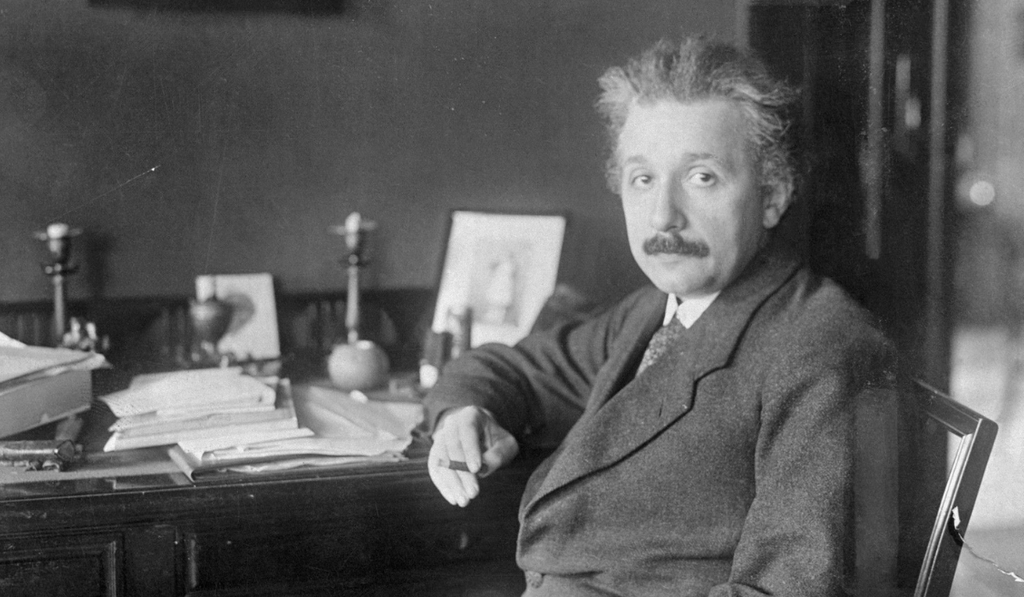
Introducing the special theory of relativity in 1905 forced humanity to abandon absolute notions of time and uniform space. Albert Einstein mathematically demonstrated that the speed of light remains constant for all observers regardless of their relative motion. This bold realization implied that spatial dimensions and temporal measurements contract or expand depending on the velocity of the traveling observer. Such counterintuitive concepts challenged centuries of philosophical consensus regarding the immutable nature of the physical universe. Today, these extraordinary rules form the indispensable technological foundation for satellite communications, particle accelerators, and global positioning navigation systems.
Unveiling the World Famous Equation
Derived directly from his special relativity framework, the famous equation E=mc2 linked mass and energy as interchangeable forms of the same phenomenon. Albert Einstein proved that even a tiny amount of physical matter contains an unimaginably massive reservoir of latent energy. This succinct mathematical expression quickly captured global popular imagination, transforming into the most recognizable scientific formula in human history. Beyond its immense cultural appeal, the formula provided crucial insights into stellar mechanics, nuclear binding forces, and cosmic energy generation processes. It demonstrated how profound universal truths could be summarized with stunning mathematical brevity and intellectual elegance.
Explaining the Mysterious Photoelectric Effect
Winning the 1921 Nobel Prize in Physics recognized the brilliant insights Albert Einstein provided regarding the quantum nature of light radiation. He proposed that light travels in discrete packets of energy later named photons, challenging the traditional wave-only model. Demonstrating that electrons eject from metal surfaces only when struck by light packets of sufficient frequency solved a major physics puzzle. This visionary work served as a fundamental stepping stone toward the broader development of modern quantum mechanics. Although relativity made him famous, this specific contribution marked his most direct foundational entry into quantum theory.
Developing the General Theory of Relativity
Expanding his earlier relativistic framework to incorporate gravitational forces consumed nearly a decade of intense intellectual labor by Albert Einstein. In 1915, he published the general theory of relativity, conceptualizing gravity not as a direct pull, but as geometric spacetime curvature. Heavy celestial objects like stars and planets warp the surrounding fabric of space, dictating how other bodies move through the cosmos. This revolutionary model successfully predicted cosmic phenomena such as gravitational lensing and the gradual orbital precession of Mercury. It completely redefined astrophysics, paving the way for modern understandings of black holes and expanding universes.
Global Recognition and Historic Expeditions
The 1919 solar eclipse expedition led by Arthur Eddington provided empirical proof for the general theory of relativity proposed by Albert Einstein. Observing starlight bending as it passed close to the sun confirmed his bold geometrical predictions about gravitational spacetime distortion. Overnight, international newspapers turned him into a household celebrity, celebrating his intellect across every continent. He embarked on extensive global lecture tours, visiting countries across Asia, Europe, and the Americas to discuss his scientific discoveries. Despite facing intense public adoration, he maintained his trademark humility, eccentric appearance, and characteristic sense of philosophical humor.
Emigrating to the United States
Rising political hostility and institutional anti-Semitism in Europe forced Albert Einstein to permanently leave Germany during the early 1930s. Accepting a prestigious research position at the Institute for Advanced Study in Princeton, New Jersey, he found a peaceful academic sanctuary. Surrounded by brilliant colleagues, he spent his remaining decades attempting to formulate a unified field theory that could merge electromagnetism and gravity. Although this grand synthesis remained uncompleted, his presence instantly transformed Princeton into a vibrant global hub for advanced theoretical physics research. America offered him safety, stability, and an environment dedicated to free intellectual inquiry.
Advocacy for Peace and Human Rights
Deeply shaken by the destructive devastation of global warfare, Albert Einstein evolved into an outspoken pacifist and passionate civil rights advocate. He consistently used his massive global platform to condemn nationalism, racial discrimination, and the dangerous proliferation of nuclear weaponry. Following World War II, he actively supported international governance movements aimed at preventing future global conflicts and securing human dignity. His humanitarian correspondence reflected a profound moral responsibility, proving that great scientific minds must care deeply about societal welfare. These compassionate public stances solidified his legacy as a global humanist philosopher as well as a physicist.
Passionate Love for Classical Music
Beyond his intense mathematical pursuits, classical music remained a lifelong emotional refuge and creative inspiration for Albert Einstein. Playing the violin expertly allowed him to express feelings and achieve mental relaxation whenever complex physics equations reached frustrating dead ends. He frequently remarked that many of his deepest scientific insights were born from musical intuition rather than formal calculation. Participating in chamber music ensembles with fellow intellectuals brought him immense joy throughout his demanding professional life. This deep artistic appreciation demonstrated that his genius encompassed both rigorous scientific logic and sensitive creative expression.
Later Years and Scientific Challenges
During his final decades at Princeton, Albert Einstein grew increasingly isolated from mainstream trends in quantum mechanics development. He famously rejected the probabilistic nature of quantum physics, insisting that fundamental natural laws operate with strict deterministic certainty. Despite these academic disagreements with younger generations of physicists, he remained universally revered as the elder statesman of global science. He continued working daily at his office, writing notes, and mentoring junior scholars who sought his wisdom. His unwavering dedication to uncovering ultimate truths persisted undiminished right up until his final days.
Passing and Immediate Global Mourning
The peaceful death of Albert Einstein occurred in April 1955 at Princeton Hospital following a sudden aortic aneurysm rupture. In accordance with his personal wishes, his passing was marked by a quiet, private funeral ceremony attended only by close family and friends. Global news outlets interrupted regular broadcasts to report the loss, prompting worldwide mourning from heads of state, students, and fellow scientists. Research institutions lowered flags to half-mast, recognizing that the human race had lost one of its most brilliant intellectual architects. His brain was preserved for scientific study, continuing his lifelong commitment to advancing human anatomical and neurological knowledge.
Lasting Impact on Modern Technology
The everyday technological infrastructure of modern society owes an enormous structural debt to the pioneering theoretical models of Albert Einstein. Semiconductor physics, laser technology, digital cameras, and satellite navigation systems all rely directly upon principles he helped establish. Engineers constantly adjust satellite clock speeds to compensate for general relativistic time dilation effects predicted over a century ago. Without his theoretical contributions, contemporary telecommunications and space exploration would remain entirely impossible. His abstract equations continue to generate practical industrial breakthroughs across multiple engineering disciplines.
Enduring Cultural Icon of Genius
Over the decades, the distinct visage of Albert Einstein with wild white hair and thoughtful eyes became a universal symbol of raw intellect. Pop culture references, advertisements, biographies, and films frequently invoke his image to represent supreme problem-solving capability and imagination. Yet beneath this mythological status lay a remarkably humble human being who enjoyed simple sailing trips and quiet domestic routines. His handwritten letters, humorous anecdotes, and personal belongings continue to fascinate collectors and historians globally. He remains the definitive archetype of the creative genius who dared to question standard consensus.
Inspirational Figure for Future Generations
Aspiring scientists across the globe continue viewing Albert Einstein as the ultimate source of career inspiration and intellectual motivation. His childhood struggles with traditional schooling offer immense reassurance to students who feel alienated by rigid educational formats. By demonstrating that deep curiosity matters far more than rote memorization, he empowered millions to pursue independent scientific inquiry. Educational foundations regularly sponsor grants and awards bearing his name to foster young talent in physics and mathematics. His legacy endures wherever young minds question authority and seek deeper comprehension of the universe.
Reflecting on a Monumental Historical Legacy
Reviewing the historical record reveals that Albert Einstein fundamentally transformed human civilization through pure mental discipline and creative visualization. His ability to imagine riding alongside light beams reshaped the entire architecture of modern physical science. From humble patent clerk in Bern to legendary professor at Princeton, his life exemplifies the incredible heights achievable through relentless intellectual dedication. Humanity continues exploring the cosmic frontiers he mapped out more than a century ago. His profound scientific heritage remains safely archived for future generations within historical summaries like Albert Einstein.
FAQs
- When was Albert Einstein born?
- Albert Einstein was born on March 14, 1879.
- What is Albert Einstein’s most famous equation?
- His most famous equation is E=mc2.
- Did Albert Einstein win a Nobel Prize?
- He won the 1921 Nobel Prize in Physics for the photoelectric effect.
- Where did Albert Einstein work in 1905?
- He worked as a patent clerk at the Swiss Patent Office in Bern.
- When did Albert Einstein pass away?
- He passed away on April 18, 1955.







[…] the household, she navigated a grounded upbringing that shaped her resilient character. Born with a unique cultural heritage, her early years laid a strong foundation for the challenges she would later face in the […]