
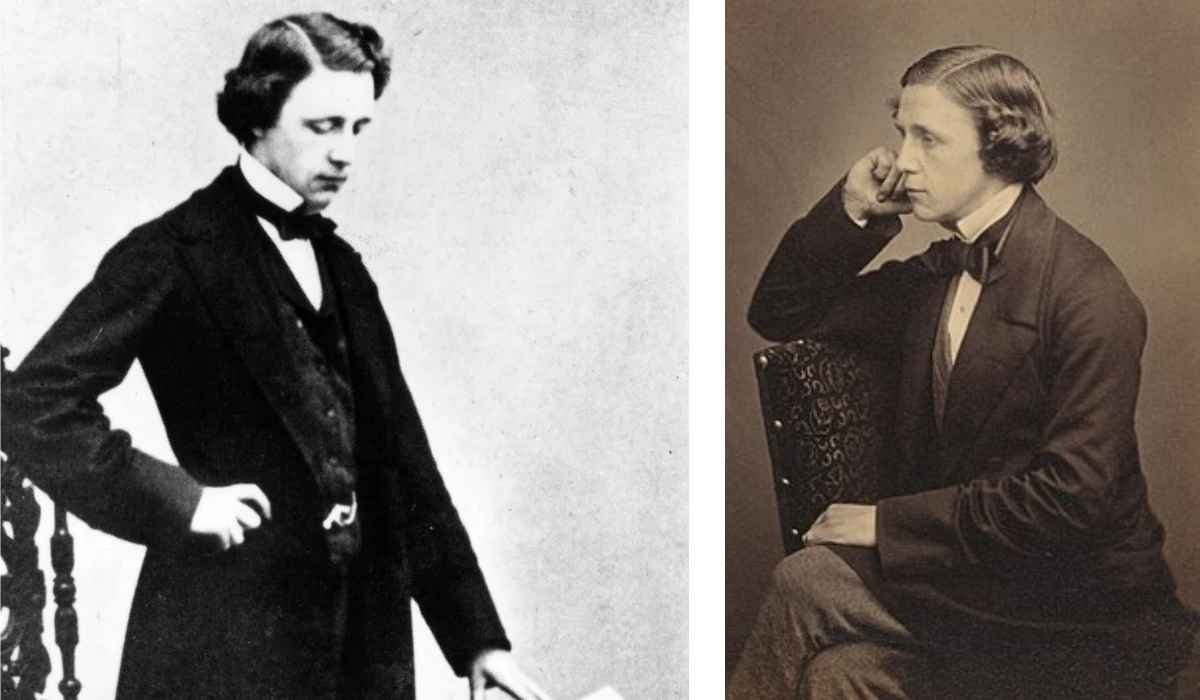
The Victorian era produced countless brilliant intellectuals, yet few captured the whimsical imagination quite like Lewis Carroll. Born as Charles Lutwidge Dodgson in the small village of Daresbury, Cheshire, this multi-talented Englishman lived a quiet life as a mathematics scholar while simultaneously crafting some of the most enduring fantasy literature in global history. His immortal creations continue to captivate readers of all ages, bridging the gap between rigorous academic logic and unbridled creative storytelling. Exploring his rich background reveals a fascinating man whose playful mind transformed children’s literature forever through unique characters, clever wordplay, and timeless narrative brilliance across generations.
Quick Bio About Lewis Carroll
| Detail | Information |
| Full Name | Charles Lutwidge Dodgson |
| Pen Name | Lewis Carroll |
| Date of Birth | January 27, 1832 |
| Place of Birth | Daresbury, Cheshire, England |
| Profession | Writer, Mathematician, Logician |
| Notable Work | Alice’s Adventures in Wonderland |
| Date of Death | January 14, 1898 |
Early Beginnings in Cheshire
Growing up in a large and bustling clerical household provided Lewis Carroll with an early foundation for entertaining others through imaginative games and homemade family newspapers. As the third child among eleven siblings, young Charles learned how to amuse his brothers and sisters using marionette shows and simple magic tricks. This playful domestic environment fostered an inventive spirit that would later influence his iconic literary career. Even during his childhood years, his natural inclination toward clever wordplay and structured amusement began to blossom into a distinct personal style that valued joy, humor, and gentle satire above strict moral lessons.
Education at Rugby and Oxford
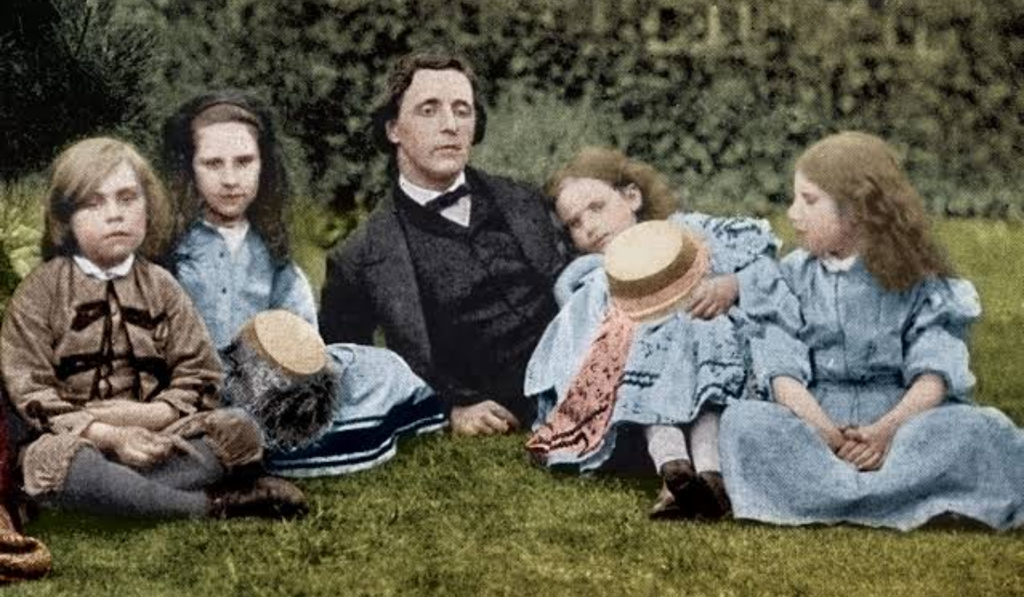
Academic pursuits defined a significant portion of his formative years, particularly after entering the prestigious Rugby School and later moving on to Christ Church College, Oxford. Lewis Carroll demonstrated exceptional aptitude in classical studies and mathematics, eventually earning top honors that secured his future within the university system. Unlike many contemporaries who pursued entirely traditional career paths, he chose to remain at Christ Church as a dedicated educator. This academic sanctuary offered him the stability, time, and intellectual freedom required to observe human quirks and refine the distinct perspective that would later birth his timeless literary masterpieces.
The Academic Career as a Mathematician
Beyond his famous fairy tales, Lewis Carroll spent decades working diligently as a respected mathematics lecturer and publishing various treatises on geometry and symbolic logic. Under his real name, Charles Lutwidge Dodgson, he produced complex academic texts addressing determinants and algebraic formulas for university students. His passion for logic was not merely professional but deeply tied to his love for structured puzzles and paradoxes. This intellectual rigor heavily influenced his creative writing, allowing him to embed subtle mathematical riddles, logical fallacies, and structural symmetry seamlessly within whimsical narrative settings that delighted readers worldwide.
Ordination and the Anglican Church
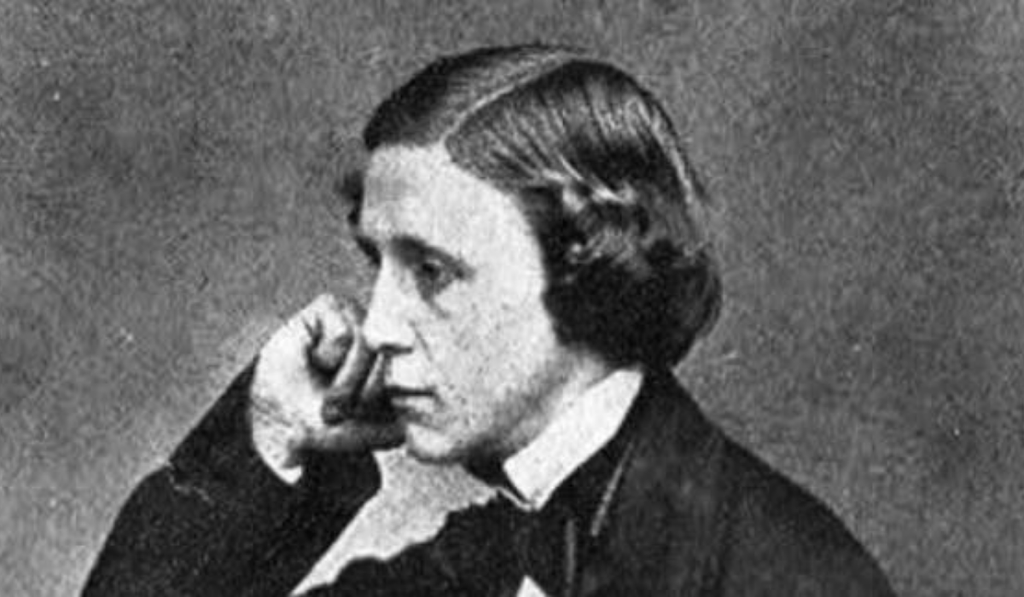
Religious devotion played a structured role in his life when Lewis Carroll was ordained as an Anglican deacon in the early eighteen-sixties. Although he never advanced to become a full priest—largely due to his personal shyness and a pronounced stutter that complicated public speaking—his clerical status remained an important facet of his identity. Living and working within the ecclesiastical and academic traditions of Oxford shaped his conservative yet deeply imaginative worldview. He navigated a quiet existence defined by institutional responsibilities, personal faith, and a meticulous attention to detail that permeated every aspect of his daily schedule.
The Inspiration Behind Wonderland
A fateful boat trip down the Isis river in July eighteen-sixty-two changed literary history forever when Lewis Carroll began improvising a fantastical tale to entertain three young sisters, particularly Alice Liddell. Charmed by the whimsical narrative, young Alice begged him to write it down, prompting the creation of a hand-written manuscript titled Alice’s Adventures Under Ground. Encouraged by friends who recognized its unique brilliance, he expanded the text for commercial publication. This spontaneous afternoon storytelling session successfully birthed a cultural phenomenon that redefined how authors approached writing specifically designed to entertain children without heavy-handed moralizing.
Publication of a Masterpiece
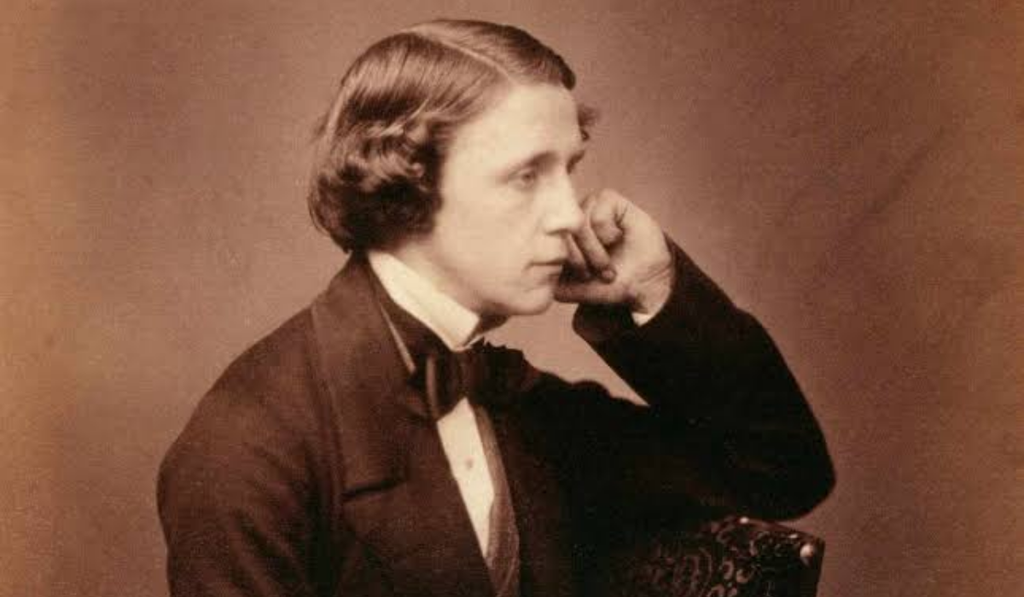
The official release of Alice’s Adventures in Wonderland in eighteen-sixty-five established Lewis Carroll as a major literary force across Victorian Britain and beyond. Illustrated brilliantly by Sir John Tenniel, the novel introduced unforgettable characters like the Cheshire Cat, the Mad Hatter, and the Queen of Hearts. Critics and readers alike praised the book’s brilliant subversion of traditional Victorian children’s literature, celebrating its clever integration of nonsensical logic and biting social satire. The immediate commercial triumph propelled the shy Oxford don into unexpected public fame, forcing him to balance his private academic life with international literary acclaim.
The Creation of Through the Looking-Glass
Capitalizing on his massive initial success, Lewis Carroll published the highly anticipated sequel, Through the Looking-Glass, and What Alice Found There, in eighteen-seventy-two. This second installment introduced brilliant chess-themed motifs, iconic mirror-world logic, and famous literary verses like the beloved nonsense poem Jabberwocky. Readers embraced the deeper philosophical undertones and intricate wordplay embedded within the narrative structure. The book cemented his reputation as a master craftsman of fantasy, proving that his imaginative capacity extended far beyond a single lucky invention and establishing a cohesive universe that readers continue to analyze and cherish today.
Master of Nonsense Verse
Poetry served as another vital outlet where Lewis Carroll showcased his unmatched linguistic dexterity and playful command of the English language. Works such as The Hunting of the Snark demonstrated his ability to construct sprawling, epic narratives entirely out of delightful absurdity and rhythmic nonsense. By inventing entirely new portmanteau words and twisting familiar idioms into surprising shapes, he challenged conventional poetic forms. His verses remain celebrated masterpieces of comic literature, proving that grammatical rules could be bent or broken entirely in the pursuit of pure, unadulterated artistic joy and theatrical amusement.
Passion for Victorian Photography
Away from his writing desk and lecture hall, Lewis Carroll pursued photography with a fierce, meticulous passion that produced hundreds of remarkable historical portraits. Embracing the cumbersome wet-plate collodion process of the mid-nineteenth century, he photographed notable artists, literary figures, and numerous children with striking artistic sensitivity. His photographic archive provides an invaluable visual window into the Victorian era, showcasing his exceptional eye for composition and light. Although he eventually abandoned the medium later in life, his photographic contributions remain studied and admired by historians of early camera artistry worldwide.
The Enigmatic Personality and Privacy
Protecting his personal privacy became an obsession as Lewis Carroll grew increasingly uncomfortable with his widespread fame and public recognition. He famously refused mail addressed to his pseudonym when delivered to Christ Church, insisting that no such person resided within the college walls. This protective barrier allowed him to maintain a semblance of normal routine amidst overwhelming public adoration. Beneath his eccentricities lay a deeply sensitive, introverted gentleman who preferred quiet friendships, solitary puzzle-solving, and the innocent company of young companions over the exhausting social demands of Victorian high society.
Puzzles, Games, and Inventions
A lifelong fascination with logic naturally led Lewis Carroll to invent numerous interactive games, word puzzles, and mathematical brain-teasers for his readers. He created early versions of word-ladder games, postal sorting devices, and tactical board game concepts designed to stimulate cognitive agility. His published collections of mathematical puzzles reflected a belief that learning and mental stimulation should be fundamentally entertaining. By turning abstract logical principles into playful pastimes, he engaged generations of students and intellectuals, proving that rigorous mental exercises could double as engaging forms of recreational entertainment.
Linguistic Contributions and Wordplay
Language transformation was an art form where Lewis Carroll excelled, introducing permanent linguistic innovations into everyday English conversation. Through his imaginative writing, he popularized terms like chortle and galumph, which seamlessly transitioned from his fictional verses into standard dictionaries. His comfort with bending syntax and blending distinct words demonstrated a profound structural understanding of linguistics. Writers and poets ever since have drawn inspiration from his fearless willingness to experiment with vocabulary, establishing him as a pioneer of modern linguistic creativity and linguistic humor.
Later Years and Continued Writing
Entering his later decades, Lewis Carroll maintained a disciplined writing routine, producing complex multi-volume projects like Sylvie and Bruno while managing his extensive correspondence. Despite slowing down physically, his intellectual curiosity remained entirely undiminished as he experimented with new narrative forms and philosophical ideas. He continued living quietly at Oxford and visiting seaside retreats in Guildford, where he spent his final years surrounded by family, books, and fond memories of a remarkably productive life dedicated to both education and whimsical literary creation.
Passing and Final Resting Place
The remarkable journey of Lewis Carroll concluded on January fourteenth, eighteen-ninety-eight, when he passed away from pneumonia at his sisters’ home in Guildford, Surrey. His death sparked widespread mourning across Great Britain, with numerous tributes honoring his immense contributions to literature, mathematics, and academic life. Laid to rest in Mount Cemetery, Guildford, he left behind an intellectual estate that resonated deeply across global cultural boundaries. Though his physical presence vanished, his vibrant literary creations ensured that his imaginative spirit would outlive him by centuries.
Global Cultural Impact and Adaptations
The cultural footprint left by Lewis Carroll expanded exponentially across film, theater, music, and fine art long after his passing. Countless cinematic adaptations, ranging from early silent short films to modern blockbuster motion pictures, have reinterpreted his Wonderland universe for fresh audiences. Artists and psychologists alike continue drawing inspiration from his dreamlike symbolism, examining the deeper layers of meaning hidden within his playful children’s stories. This universal adaptability guarantees that his literary creations remain permanently embedded in the collective consciousness of modern international popular culture.
Lasting Legacy in Children’s Literature
As a true trailblazer of modern fantasy, Lewis Carroll fundamentally transformed the landscape of children’s literature by prioritizing imaginative delight over strict Victorian moral instruction. Authors of magical realism and whimsical fiction frequently cite his work as foundational inspiration for their own creative endeavors. His ability to honor children’s natural intelligence through complex narrative structures elevated the entire genre. Today, his timeless books stand shoulder-to-shoulder with the greatest classics of human history, securing his permanent place among the literary elite of the Western world.
Enduring Popularity of the Alice Books
Generations of readers continue discovering the unique magic embedded within the pages of his masterworks, ensuring that Lewis Carroll remains a household name globally. Translated into over eighty different languages, the Alice adventures rank among the most frequently quoted books in the English language, second only to the works of William Shakespeare. Their unique blend of mathematical logic, linguistic absurdity, and emotional warmth guarantees endless re-readability. This extraordinary staying power proves that true creative genius transcends its historical era to touch human hearts across successive centuries.
Commemoration and Societies Worldwide
Dedicated literary organizations, including the Lewis Carroll Society, actively preserve his historical artifacts, manuscripts, and photographic collections for future scholars. Academic conferences and international exhibitions regularly celebrate the multifaceted genius of Lewis Carroll, exploring his contributions to mathematics, logic, and Victorian art. These collaborative preservation efforts ensure that his complex personal history and brilliant artistic output receive rigorous scholarly attention. Through ongoing academic research and public celebration, his extraordinary intellectual legacy remains active, vibrant, and thoroughly protected for posterity.
Reflections on a Visionary Genius
Ultimately, examining the comprehensive life of Lewis Carroll reveals a brilliant paradox of a conservative Oxford mathematician who unlocked the boundless gates of human imagination. His unique ability to balance rigid academic discipline with pure, uninhibited creativity resulted in artistic achievements that continue to enchant millions. By daring to look at the world through a whimsical, upside-down mirror, he gifted humanity an eternal escape into logic and wonder. His extraordinary creations will forever remind readers of the enduring power of laughter, curiosity, and childlike wonder in an increasingly complex world.
Frequently Asked Questions
- What was the real name of Lewis Carroll?
- Charles Lutwidge Dodgson served as the actual birth name of the famous author.
- When was Lewis Carroll born?
- January 27, 1832 marked his birth date in Daresbury, Cheshire, England.
- What inspired Alice’s Adventures in Wonderland?
- A boat trip with young Alice Liddell inspired him to improvise the original fantasy tale.
- Did Lewis Carroll work as a mathematician?
- He spent decades teaching mathematics and publishing academic texts at Christ Church, Oxford.
- Where can I read more about his life history?
- Learn additional historical details directly by visiting the Lewis Carroll.






[…] pursuits, family dynamics, and a lasting footprint across multiple decades of changing American entertainment landscapes that continue to intrigue curious biographers, dedicated film historians, and dedicated […]