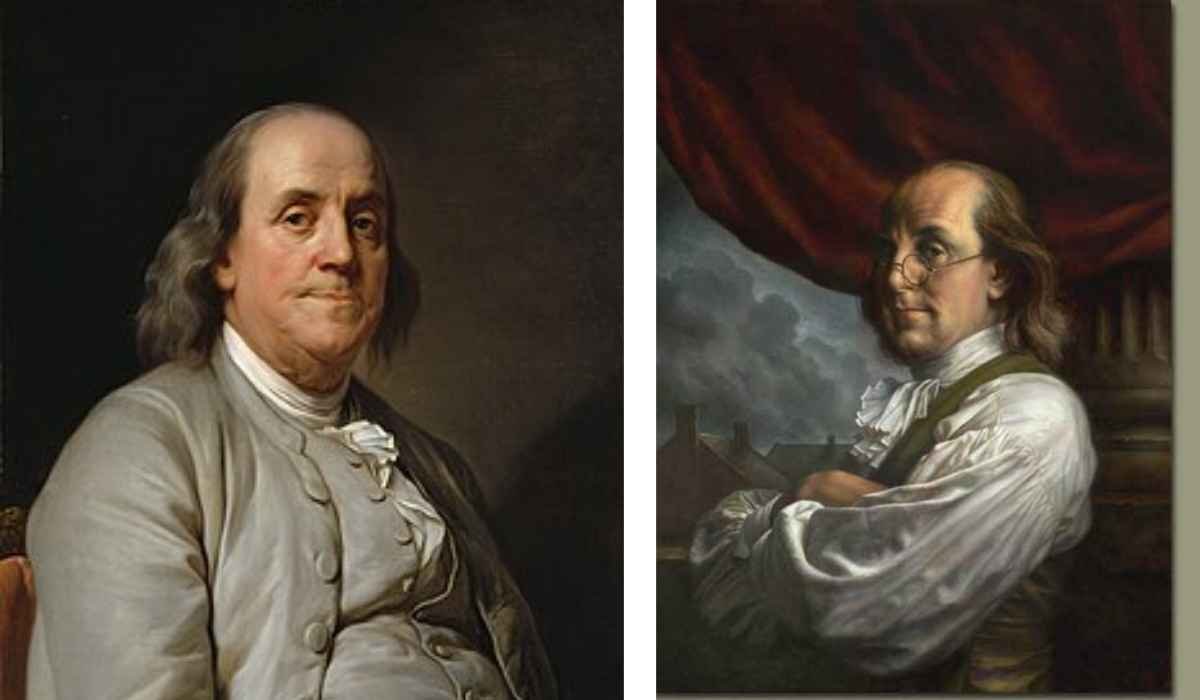
The remarkable journey of Benjamin Franklin began in Boston where an ordinary upbringing shaped an extraordinary mind destined to change the world. From humble beginnings as a young apprentice printer to becoming one of the most celebrated Founding Fathers of the United States, his path was defined by relentless curiosity and unyielding determination. He mastered the art of communication and self-education, proving that formal schooling is never the sole boundary of true intelligence. Every single challenge he faced transformed into an opportunity for growth, innovation, and leadership that would permanently alter the course of history. Today, people remember Benjamin Franklin not just as a historical icon, but as the ultimate symbol of American ingenuity, pragmatism, and civic duty.
Quick Bio Overview Table
| Attribute | Detail |
| Born | January 17, 1706, Boston, Massachusetts |
| Died | April 17, 1790, Philadelphia, Pennsylvania |
| Profession | Printer, Publisher, Author, Scientist, Diplomat |
| Key Achievements | Founding Father, Signer of Declaration of Independence |
| Notable Inventions | Lightning rod, Bifocals, Franklin stove |
Early Childhood Years and Boston Beginnings
Growing up in a large family with limited financial resources meant that young Benjamin Franklin had to learn the true value of hard work very early in life. His father wanted him to pursue a career in the church, but economic constraints cut his formal education short after just a couple of years. Despite these early setbacks, an insatiable passion for reading drove him to consume every book he could possibly borrow or purchase. These formative years in colonial Boston laid a robust foundation of self-reliance and critical thinking that would characterize Benjamin Franklin throughout his entire adult life.
Apprenticeship and the Printing Trade
Stepping into the world of publishing as a young teenager gave Benjamin Franklin a practical education that far exceeded any traditional classroom instruction available at the time. Working diligently inside his brother print shop, he absorbed the mechanics of typography, journalism, and public persuasion while secretly publishing sharp satirical essays. This hands-on experience sharpened his writing style and taught him how to connect effectively with ordinary everyday readers. The trade skills mastered during this intense period empowered Benjamin Franklin to eventually build his own successful printing empire from scratch.
Escape to Philadelphia and New Horizons
Seeking independence and freedom from a difficult working relationship, a young Benjamin Franklin made a daring escape to the bustling city of Philadelphia. Arriving with very little money in his pockets, he navigated unfamiliar streets and quickly found employment within local printing houses. This vibrant Quaker city offered an atmosphere of tolerance and opportunity that suited his ambitious and progressive personality perfectly. The dynamic environment of Philadelphia allowed Benjamin Franklin to cultivate vital professional networks and establish deep roots that transformed his future trajectory.
Rise as a Successful Publisher and Author
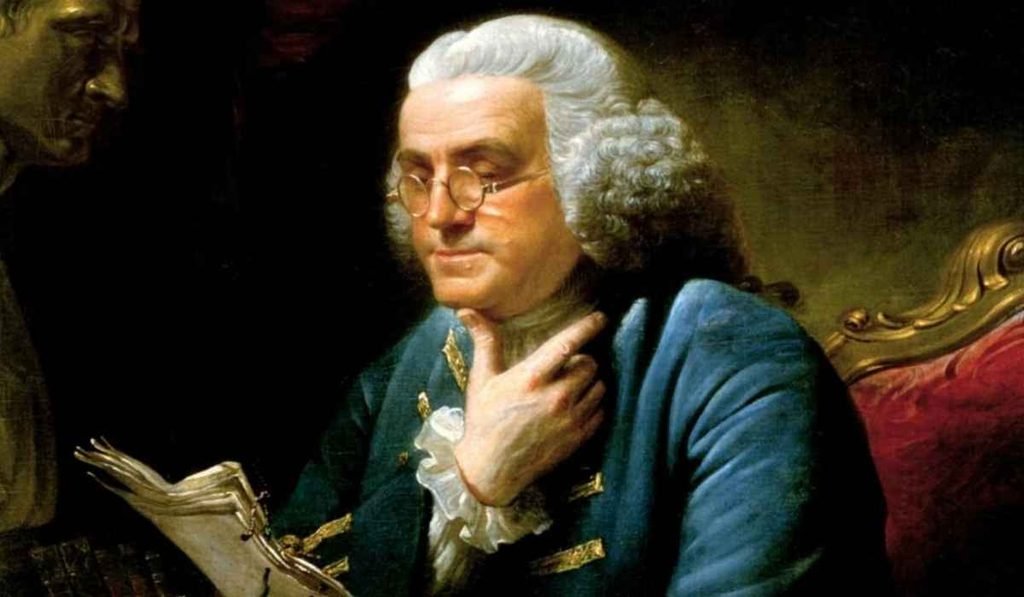
Establishing his own independent print shop allowed Benjamin Franklin to launch influential publications like the widely read Pennsylvania Gazette. His commercial acumen expanded further with the creation of Poor Richard Almanack, which filled pages with witty aphorisms, practical wisdom, and clever humor. These publications achieved massive popularity across the American colonies, securing his financial independence and cementing his reputation as a master communicator. Through astute business decisions and engaging content, Benjamin Franklin built a lasting media legacy that resonated deeply with colonial society.
Pioneering Civic Institutions in Philadelphia
Beyond commercial success, Benjamin Franklin dedicated enormous energy toward improving community life through organized civic action and collaborative public projects. He spearheaded the creation of America first subscription library, established a volunteer firefighting company, and helped found the Pennsylvania Hospital. His vision for collective betterment also led to the creation of the institution that eventually evolved into the prestigious University of Pennsylvania. These enduring public infrastructure achievements demonstrated how deeply Benjamin Franklin cared about the educational, physical, and social welfare of his fellow citizens.
Scientific Experiments and Electrical Discoveries
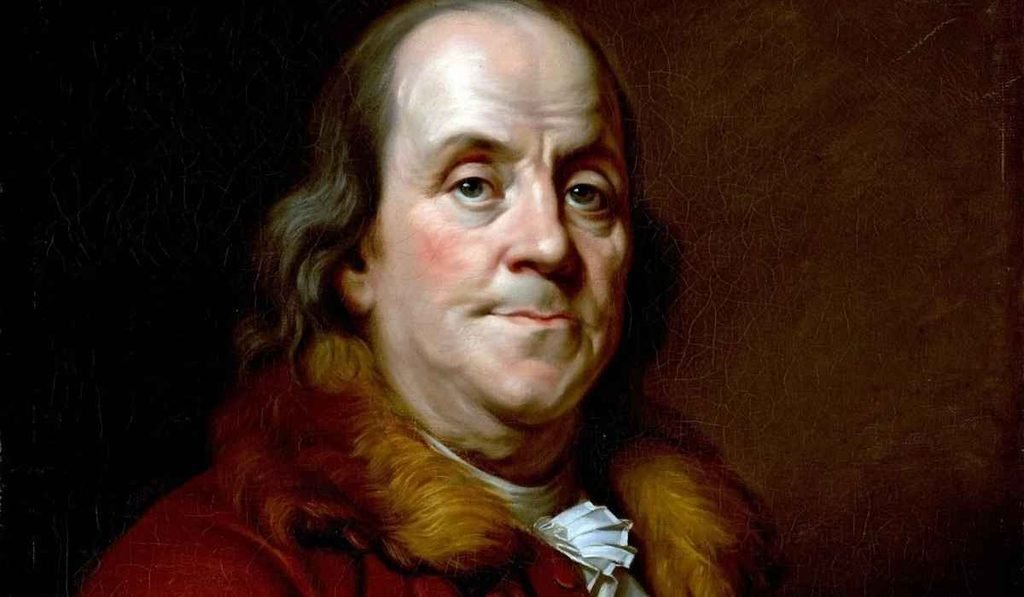
Stepping away from active business pursuits in his middle age enabled Benjamin Franklin to channel his boundless curiosity into groundbreaking scientific research. His famous experiments with electricity, including the legendary kite-flying test, proved that lightning is fundamentally an electrical phenomenon. He introduced essential scientific terminology such as positive and negative charges, creating foundational principles that still guide modern physics today. These remarkable intellectual breakthroughs brought global acclaim, proving that Benjamin Franklin was a world-class scientist as well as a practical innovator.
Ingenious Inventions That Changed the World
The practical mindset of Benjamin Franklin manifested through a diverse array of clever inventions designed to make everyday human life safer and more comfortable. He invented the lightning rod to protect wooden buildings from devastating fires, created bifocal glasses to correct multiple vision problems, and designed the energy-efficient Franklin stove. Crucially, he never patented any of his inventions, believing that public utility and shared human progress mattered far more than personal financial gain. This selflessness ensured that the brilliant practical innovations of Benjamin Franklin spread rapidly across the globe to benefit all humanity.
Political Awakening and Colonial Leadership
Transitioning into public service during turbulent times allowed Benjamin Franklin to emerge as a prominent voice for colonial rights and political unity. He represented Pennsylvania in local assemblies and later traveled abroad to advocate fiercely against unfair British taxation policies like the Stamp Act. His sharp diplomatic testimony before the British Parliament showcased his remarkable ability to navigate hostile political landscapes with composure and tactical brilliance. Through these strategic leadership efforts, Benjamin Franklin steadily guided colonial consciousness toward the inevitable necessity of self-governance.
The Albany Plan of Union and Early Unity
Recognizing the urgent need for coordinated defense long before the revolution, Benjamin Franklin drafted the ambitious Albany Plan of Union. This visionary proposal sought to create a unified government among the separate colonies to manage shared security and expansion challenges effectively. Although colonial legislatures and the British crown ultimately rejected the plan, it planted the vital conceptual seeds for future continental federation. Historians widely view this initiative as a masterclass in early statecraft that established Benjamin Franklin as an visionary architect of American unity.
Defending Colonial Interests in London
Spending crucial years residing in London as a colonial agent gave Benjamin Franklin a unique vantage point on the growing rift with Britain. He worked tirelessly behind the scenes to bridge cultural misunderstandings and negotiate fair compromises between proud British ministers and restless American colonists. When peaceful reconciliation grew impossible due to stubborn parliamentary overreach, his loyalty shifted decisively toward the American cause. This painful transition transformed Benjamin Franklin from a hopeful imperial loyalist into an unshakeable champion of American independence.
Drafting the Declaration of Independence
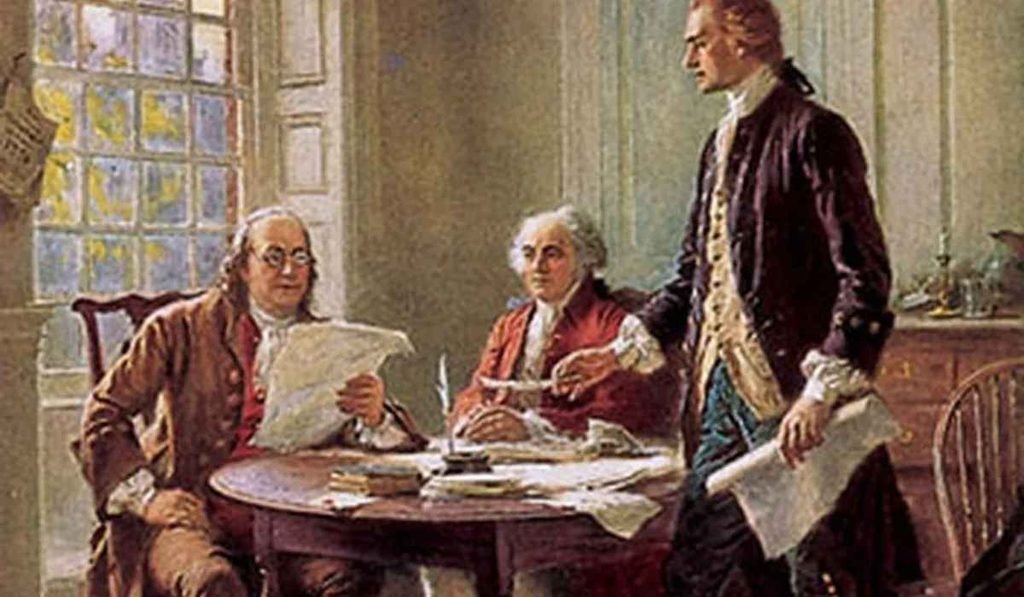
Returning home to a nation on the brink of war placed Benjamin Franklin directly into the inner circle of the continental rebellion. He served on the prestigious Committee of Five tasked with drafting a formal document to announce the birth of a new sovereign republic. While Thomas Jefferson penned the primary text, Benjamin Franklin offered critical edits, moral encouragement, and invaluable international credibility to the revolutionary effort. Signing the Declaration of Independence cemented his status as a legendary Founding Father willing to risk everything for liberty.
Diplomatic Triumph in France During the Revolution
Securing vital military and financial support from the French monarchy stands as arguably the greatest diplomatic achievement of Benjamin Franklin during the war. Arriving in Paris as an American envoy, he captured the imagination of the French public, nobility, and court through his unmatched charisma and intellect. His subtle negotiations successfully forged the critical Franco-American alliance that decisively turned the tide of the Revolutionary War. Without the legendary diplomatic prowess of Benjamin Franklin, the struggling continental army might never have achieved ultimate victory.
Negotiating the Treaty of Paris and Peace
Bringing a bloody global conflict to an official close required exceptional patience, strategic foresight, and masterful negotiation skills from seasoned statesmen. Working alongside fellow commissioners in Europe, Benjamin Franklin helped hammer out the historic Treaty of Paris that recognized American independence and defined new national borders. His calm demeanor and balanced approach disarmed suspicious British diplomats and secured highly favorable terms for the newborn republic. This monumental peace treaty allowed Benjamin Franklin to return to his homeland knowing his supreme diplomatic mission had succeeded completely.
The Constitutional Convention and Statecraft Legacy
Entering his final years of public service, an elderly Benjamin Franklin attended the Constitutional Convention in Philadelphia to help shape the supreme law of the land. Despite his failing physical health, he frequently served as a calming mediator when bitter compromises threatened to derail the fragile convention proceedings. His eloquent final speech urging delegates to accept the imperfect federal Constitution helped save the convention from total collapse. The foundational democratic framework of modern America bears the permanent stabilizing influence of Benjamin Franklin.
Literary Masterpiece: The Autobiography of Benjamin Franklin
Leaving behind one of the most famous memoirs ever written, Benjamin Franklin detailed his remarkable life story with refreshing honesty, wit, and introspection. The text outlines his systematic pursuit of moral perfection through thirteen core virtues and offers timeless advice on personal productivity and character development. Generations of readers have studied this literary masterpiece to learn how disciplined habits and continuous self-improvement can unlock human potential. Through his candid autobiographical writing, Benjamin Franklin continues to mentor and inspire ambitious seekers across centuries.
Abolitionist Efforts and Later Social Views
Evolving past the complex social norms of his earlier decades, Benjamin Franklin spent his final years actively supporting the abolitionist movement in America. He lent his prestigious name and moral authority to anti-slavery societies, eventually serving as the president of the Pennsylvania Abolition Society. He petitioned Congress to end the slave trade and advocated fiercely for the integration and education of freed African Americans. This progressive shift demonstrates that Benjamin Franklin remained intellectually flexible and morally courageous until his final breath.
Death Memorialization and Lasting Cultural Impact
When Benjamin Franklin passed away in April 1790 at the grand age of eighty-four, tens of thousands mourned the loss of America most beloved citizen. Tributes poured in from across the globe, celebrating a life that had successfully spanned printing, science, literature, philosophy, and statecraft. Monuments, currency portraits, and institutional namesakes quickly proliferated to honor his monumental contributions to human civilization. The cultural echo of Benjamin Franklin remains deeply embedded in the modern American identity, symbolizing intellectual freedom, civic responsibility, and endless innovation.
Philosophy of Thrift Industry and Practical Virtue
The underlying philosophy championed by Benjamin Franklin placed supreme value on industriousness, financial prudence, personal integrity, and continuous learning. He famously argued that time is money and that small, disciplined habits compound over time to create massive personal and societal success. His pragmatic approach rejected idle speculation in favor of tangible actions that yielded measurable improvements for local communities. This practical work ethic established by Benjamin Franklin remains a core pillar of modern entrepreneurial culture and personal development philosophy today.
Historical Assessment and Enduring Global Resonance
Analyzing the sweeping historical impact of Benjamin Franklin reveals a polymath whose diverse achievements reshaped multiple distinct fields of human endeavor simultaneously. Whether exploring atmospheric electricity, designing life-saving technology, or engineering a new democratic nation, his intellect proved consistently formidable. He remains the quintessential self-made man who used wit, grit, and generosity to elevate both himself and human society. To explore more details about this historical giant, visit the comprehensive Benjamin Franklin.
Frequently Asked Questions
- Q: When and where was Benjamin Franklin born?
- A: Benjamin Franklin was born on January 17, 1706, in Boston, Massachusetts.
- Q: What are some of his most famous inventions?
- A: His notable inventions include the lightning rod, bifocal glasses, and the Franklin stove.
- Q: Did Benjamin Franklin sign the Declaration of Independence?
- A: Yes, he was one of the key signers of the Declaration of Independence.
- Q: What scientific breakthrough is he most famous for?
- A: He proved through his kite experiment that lightning is a form of electrical energy.
- Q: When did Benjamin Franklin pass away?
- A: He passed away on April 17, 1790, at the age of eighty-four in Philadelphia.