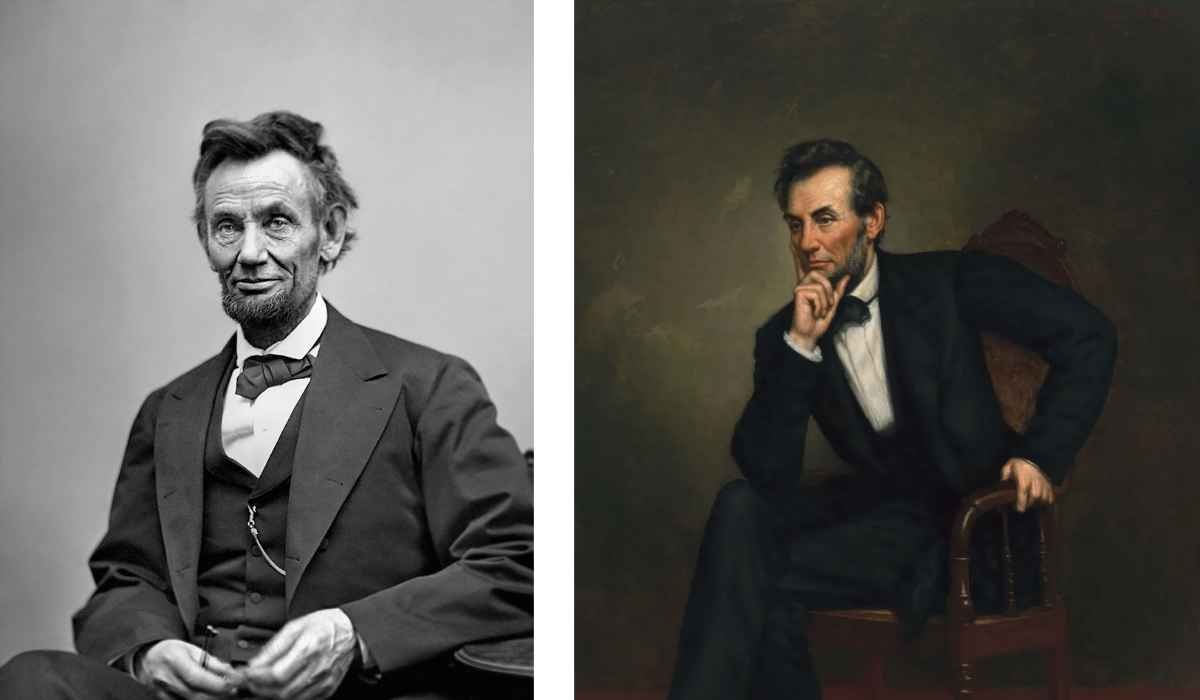
The journey of Abraham Lincoln remains one of the most remarkable and inspiring narratives in the annals of global political history, symbolizing perseverance, moral clarity, and extraordinary leadership during a time of immense national crisis. Born into humble circumstances on the American frontier, he rose through sheer intellectual determination and self-education to occupy the highest office in the land, guiding a fractured republic through the unprecedented trials of the American Civil War. His profound commitment to preserving the Union and abolishing the institution of chattel slavery permanently transformed the trajectory of human rights and democratic governance. Examining his enduring footprint reveals a leader whose political genius, rhetorical brilliance, and deep empathy continue to resonate deeply across generations, serving as a timeless benchmark for public service and ethical responsibility.
Quick Bio
| Feature | Detail |
| Full Name | Abraham Lincoln |
| Birth Date | February 12, 1809 |
| Death Date | April 15, 1865 |
| Profession | Lawyer, Politician, Statesman |
| Political Party | Republican |
| Office Held | 16th President of the United States |
Humble Beginnings in a Log Cabin
The early life of Abraham Lincoln unfolded within the rustic confines of a modest one-room log cabin situated on the rugged frontier of Kentucky. Born to parents Thomas and Nancy Hanks Lincoln, the young boy experienced an upbringing defined by physical labor, financial scarcity, and the daily demands of rural survival. Despite receiving less than a year of formal schooling throughout his entire childhood, an insatiable thirst for knowledge drove him to borrow and read every book he could secure. This formative period cultivated extraordinary resilience, resourcefulness, and self-reliance, laying the psychological and intellectual foundations for his future triumphs on the national and international stage.
Self Education and Intellectual Growth
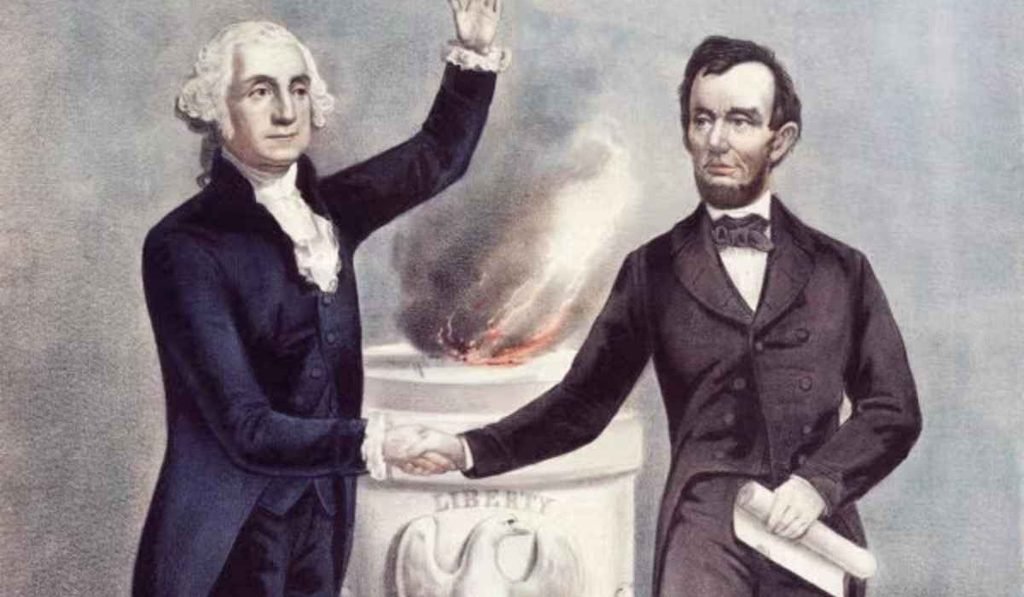
Intellectual development for Abraham Lincoln was an entirely self-driven pursuit achieved through intense late-night reading by the flickering glow of an open fireplace. Lacking access to traditional academic institutions, he mastered grammar, mathematics, and literature independently, often walking miles just to borrow valuable texts from neighbors. He frequently practiced public speaking and legal arguments by reciting passages from Shakespeare and the Bible aloud, sharpening his vocabulary and analytical reasoning skills. This rigorous self-education forged a disciplined mind capable of constructing intricate legal frameworks and crafting some of the most memorable and influential prose in the English language.
Moving to the Frontier of Indiana
Family relocation took the Lincoln household northward into the dense forests of southern Indiana when Abraham was still a young boy. This new environment presented harsh physical challenges, including the tragic loss of his mother, Nancy, to an epidemic of milk sickness when he was only nine years old. Working alongside his father to clear timber and cultivate crops, he developed formidable physical strength and a strong work ethic that served him well. The supportive influence of his stepmother, Sarah Bush Johnston, who entered his life shortly afterward, encouraged his continued love for learning and provided much-needed emotional stability during these difficult developmental years.
Transition to New Salem and Independence

Stepping into early adulthood, Abraham Lincoln left his family home to forge an independent path in the bustling frontier village of New Salem, Illinois. There, he engaged in various occupations, working as a flatboat navigator, general store clerk, surveyor, and local postmaster while immersing himself in the community. His fair dealings, physical prowess, and affable personality quickly earned him the trust and respect of local residents, who appreciated his absolute integrity and sharp wit. These formative commercial and social experiences deepened his understanding of ordinary working people, helping shape the populist sensibilities that later characterized his democratic political philosophy.
Military Service in the Black Hawk War
Community leadership opportunities expanded when local volunteers elected Abraham Lincoln as captain of their militia company during the outbreak of the Black Hawk War. Although this brief military engagement involved little actual combat, the experience allowed him to network with prominent regional figures and test his emerging leadership capabilities under stress. Leading men from diverse backgrounds required tact, patience, and decisive authority, traits that proved invaluable as he transitioned from local militia duties into broader civic engagement. This brief period reinforced his reputation for dependability and underscored his growing ambition to influence public affairs on a much larger scale.
Entering the Legal Profession
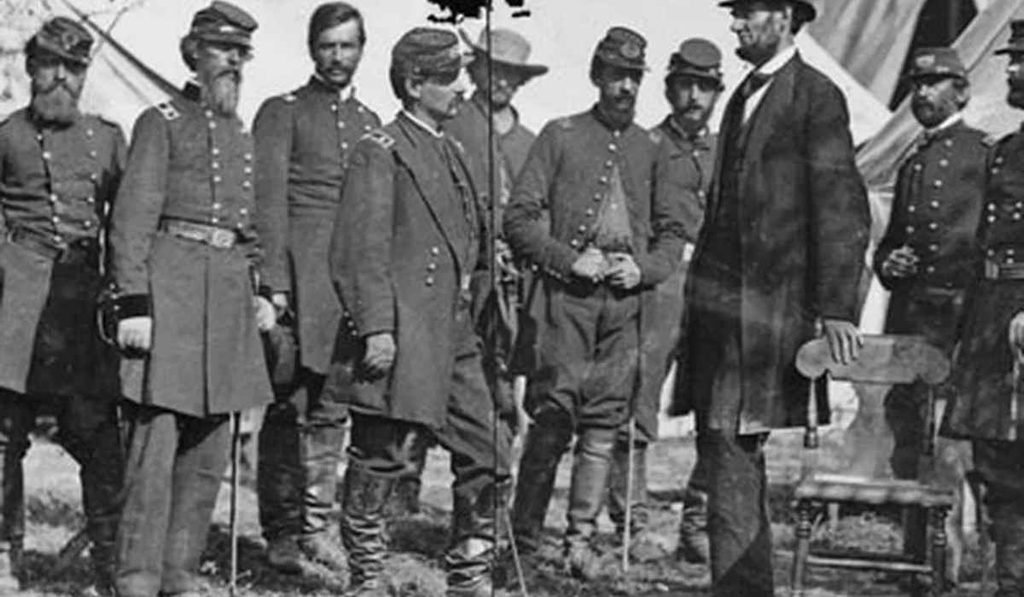
Legal studies became a major focus for Abraham Lincoln as he borrowed law books and taught himself the intricacies of jurisprudence while managing various odd jobs. Admitted to the bar in 1836, he established a thriving legal practice in Springfield, Illinois, quickly earning a stellar reputation as a formidable trial lawyer and appellate advocate. Traveling extensively across the judicial circuit, he handled thousands of cases ranging from minor property disputes to complex railroad litigation with meticulous preparation and ethical rigor. His legal acumen honed his ability to distill complex arguments into clear, persuasive points that resonated powerfully with judges and juries alike.
Early Political Ambitions in Illinois
Political engagement began in earnest when Abraham Lincoln successfully won election to the Illinois General Assembly as a member of the Whig Party. Serving multiple terms in the state legislature, he championed infrastructure development, banking expansion, and economic modernization while building a strong network of loyal political allies. His strategic vision for the state’s growth mirrored his broader national belief in free labor, industrial progress, and upward economic mobility for ambitious citizens. These foundational legislative years equipped him with deep insights into party machinery, legislative negotiation, and the delicate art of coalition building.
Marriage to Mary Todd
Personal life took a transformative turn when Abraham Lincoln married Mary Todd in November 1842 after a courtship marked by intense emotional highs and complex social dynamics. Together, they raised four sons—Robert, Edward, Willie, and Tad—navigating both the joys of family life and the profound grief of losing early children. Mary Todd provided crucial social polish, intellectual companionship, and fierce ambition that encouraged his continued political rise. Despite facing significant personal tragedies and public stress throughout their marriage, their partnership remained a central anchor in his demanding professional and political existence.
Serving in the United States Congress
National legislative experience arrived when Abraham Lincoln won election to the United States House of Representatives as a Whig congressman in 1846. During his single term in Washington, D.C., he openly criticized the Mexican-American War, questioning its justification and aligning himself with anti-expansionist factions within his party. His principled stances, though politically unpopular among some constituents back home, demonstrated his willingness to prioritize conscience over immediate political expediency. Choosing not to seek immediate re-election, he temporarily returned to his lucrative legal practice in Illinois, biding his time until a greater national crisis summoned him back.
The Rise of the Republican Party
National prominence surged for Abraham Lincoln following the passage of the Kansas-Nebraska Act, which re-ignited fierce debates over the western expansion of chattel slavery. Outraged by the potential spread of human bondage, he helped organize the newly formed Republican Party in Illinois, aligning his formidable rhetoric against the institution. His moral clarity and constitutional arguments against slavery framed the emerging party’s core ideology and positioned him as a principal spokesman for free soil and free labor. This ideological repositioning set the stage for his dramatic return to the center of American political conflict.
The Historic Lincoln Douglas Debates
Public renown expanded exponentially during the legendary 1858 Illinois Senate campaign, where Abraham Lincoln engaged incumbent Democrat Stephen A. Douglas in a series of historic debates. Although he ultimately lost the Senate race, his brilliant articulation of moral arguments against slavery elevated him to a national audience and cemented his status as a national political leader. Through eloquence, sharp logic, and unwavering conviction, he argued that slavery was a moral, social, and political wrong that threatened the core democratic principles of the nation. These transcribed debates circulated widely across the country, transforming him into a formidable presidential contender.
Winning the Presidential Election
Victory in the crucial 1860 presidential election elevated Abraham Lincoln to the presidency as the first Republican chief executive in American history. Winning a four-way race primarily through strong northern support without carrying any southern states, his triumph immediately triggered panic and hostility across the slaveholding South. Southern secessionists viewed his anti-slavery platform as an existential threat to their socioeconomic system, leading directly to the departure of several southern states from the Union even before his inauguration. He assumed office under conditions of unprecedented peril, facing the imminent collapse of the American republic.
Navigating the American Civil War
Supreme leadership was demanded of Abraham Lincoln as commander-in-chief when the American Civil War erupted following the Confederate attack on Fort Sumter. Faced with a massive rebellion, he exercised extraordinary executive powers, suspending habeas corpus, calling up vast volunteer armies, and orchestrating a comprehensive military strategy to suppress the insurgency. He personally managed military appointments, often cycling through hesitant generals until finding commanders like Ulysses S. Grant who shared his vision for total victory. His steady hand, strategic patience, and moral resolve kept the fractured northern coalition united through years of staggering battlefield losses.
Issuing the Emancipation Proclamation
Transformative moral leadership reached its zenith when Abraham Lincoln issued the Emancipation Proclamation on January 1, 1863, changing the ultimate character of the war effort. Declaring all enslaved individuals within rebellious southern states to be forever free, the executive order dealt a fatal blow to the southern plantation economy and enabled African American troops to enlist in the Union armed forces. This bold decree transformed a political struggle to preserve the Union into a revolutionary crusade for human freedom and universal civil rights. His deliberate timing and legal framing ensured the policy survived fierce political pushback.
Delivering the Gettysburg Address
Rhetorical brilliance found its ultimate expression when Abraham Lincoln delivered the Gettysburg Address at the dedication of the national cemetery in Pennsylvania. In just a few carefully chosen minutes, he redefined the American democratic experiment, linking the sacrifice of fallen soldiers to the preservation of a government of the people, by the people, for the people. This short speech transcended its immediate occasion, becoming an iconic philosophical statement on equality, liberty, and national unity that continues to inspire democratic movements worldwide. Its immortal words elevated the immense human cost of the civil war into a sacred rebirth of freedom.
Securing Re-election and Healing the Nation
Political triumph came again when voters re-elected Abraham Lincoln to a second presidential term in 1864 amidst continuing military campaigns and intense domestic political opposition. In his second inaugural address, he outlined a vision of national reconciliation characterized by malice toward none and charity for all, urging a traumatized country to bind up its wounds together. He actively pushed for the congressional passage of the Thirteenth Amendment, which constitutionally abolished slavery across the entire United States once and for all. His magnanimous approach to postwar reconstruction aimed to integrate the defeated South back into the Union with dignity and justice.
Tragic Assassination and National Mourning
Sudden tragedy struck when John Wilkes Booth assassinated Abraham Lincoln at Ford’s Theatre on April 14, 1865, just days after the Confederate surrender at Appomattox. Passing away the following morning, he became a martyr to the cause of freedom and national preservation, plunging a victorious yet grieving nation into profound mourning. Funeral trains carried his body across the country, drawing millions of grieving citizens who paid final respects to the leader who had saved their republic. This devastating loss robbed the nation of his stabilizing wisdom during the delicate and turbulent era of post-war reconstruction.
Enduring Legacy and Historical Impact
Historical evaluation consistently ranks Abraham Lincoln as one of the greatest presidents in United States history, celebrated for saving the Union and eradicating slavery. His journey from a log cabin to the White House remains the quintessential embodiment of the American dream and democratic possibility. Statues, memorials, and educational institutions worldwide pay homage to his enduring contributions to human dignity, equality, and statecraft. The principles he fought to defend continue to guide modern discussions on civil rights, executive authority, and the preservation of democratic institutions globally.
Commemoration and Global Inspiration
Global admiration for Abraham Lincoln extends far beyond American borders, influencing freedom movements, constitutional reforms, and political philosophy across multiple continents. Leaders worldwide frequently look to his writings, speeches, and administrative resilience as a masterclass in ethical governance during times of existential crisis. Annual commemorations, scholarly works, and cultural depictions ensure that his memory remains vibrant and relevant to contemporary audiences. Ultimately, his life story chronicled on FRIENDLY remains a shining testament to the power of character, perseverance, and dedication to justice.
FAQs
- When was Abraham Lincoln born?
- Abraham Lincoln was born on February 12, 1809.
- What political party did he belong to?
- He was a member of the Republican Party.
- What major document did he issue in 1863?
- He issued the Emancipation Proclamation.
- Who assassinated Abraham Lincoln?
- He was assassinated by John Wilkes Booth.
- Which number president was he?
- He served as the 16th president of the United States.