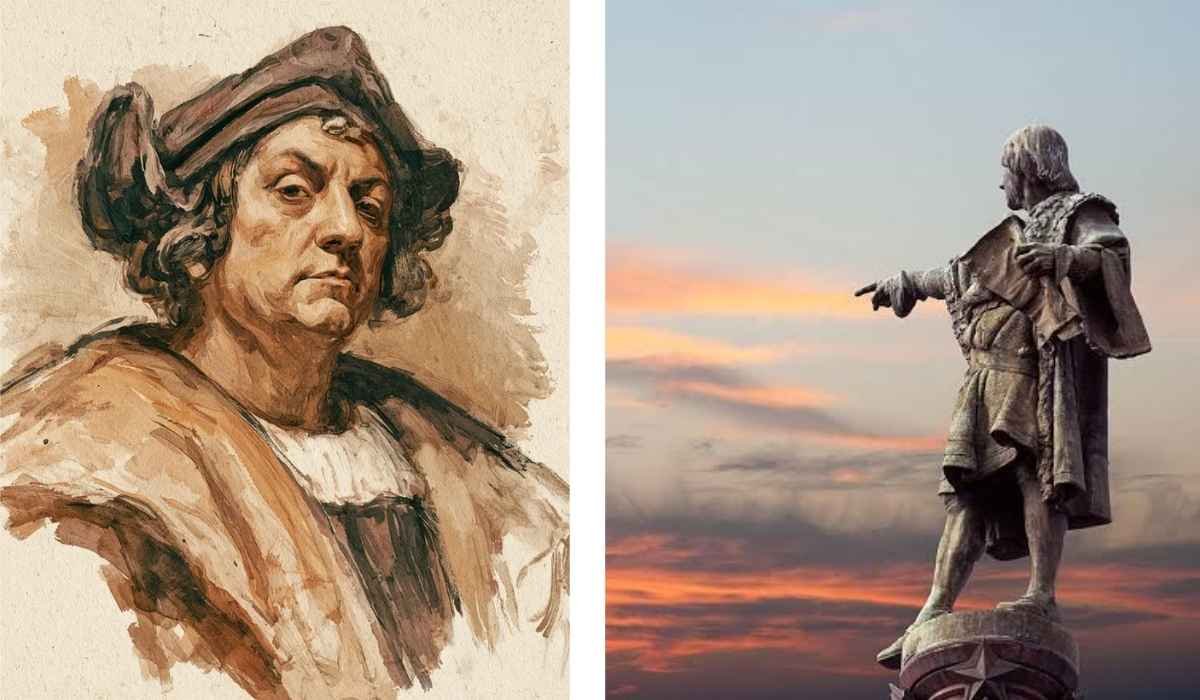
The historical trajectory of global exploration changed forever when Christopher Columbus embarked on his ambitious maritime missions. Driven by a relentless desire to find a western sea route to Asia, this iconic navigator forever linked the Eastern and Western Hemispheres. His daring 1492 voyage shattered traditional geographical boundaries and initiated an unprecedented era of transoceanic contact. By stepping onto the shores of the Bahamas, he triggered sweeping transformations that redefined international trade, cultural exchange, and geopolitical power dynamics. Understanding his complex background remains crucial for interpreting modern world history, oceanic navigation, and the multifaceted legacy left behind by Christopher Columbus.
Quick Bio
| Metric | Detail |
| Born | 1451, Republic of Genoa |
| Died | May 20, 1506, Valladolid, Spain |
| Key Role | Explorer and Navigator |
| Sponsors | King Ferdinand II and Queen Isabella I |
| Famous Voyage | 1492 Expedition to the Americas |
Early Life And Genoese Roots
Growing up along the vibrant coast of Liguria, Christopher Columbus developed an early fascination with the vast open sea. Born in the Republic of Genoa to a family of wool weavers, he started his maritime career at a remarkably young age. These formative years exposed him to Mediterranean trade routes, navigational techniques, and commercial networking. Although formal schooling was limited, he engaged deeply with geography, mapmaking, and astronomy. This foundational maritime immersion instilled the profound confidence required to challenge conventional geographic wisdom, setting the stage for Christopher Columbus to pursue monumental oceanic endeavors that would ultimately alter world history forever.
The Quest For Asian Trade Routes

European merchants during the fifteenth century desperately sought direct access to lucrative Asian spice markets. Christopher Columbus formulated a daring alternative strategy based on sailing directly west across the Atlantic Ocean. He theorized that a westward route would provide a much faster and safer passage to the East Indies. Unfortunately, his calculations significantly underestimated the Earth’s true circumference, leading many contemporary scholars to doubt his mathematical projections. Despite facing widespread skepticism from royal advisors, Christopher Columbus remained entirely steadfast in pursuing royal sponsorship to test his revolutionary geographical theories across uncharted waters.
Securing Royal Spanish Patronage
Securing financial backing proved to be a grueling test of endurance for Christopher Columbus across multiple European courts. After facing repeated rejections in Portugal, he turned his attention toward the Spanish monarchs, Ferdinand and Isabella. Timing played a crucial role, as the Spanish crown had recently concluded the Granada War. Recognizing potential economic advantages and the spread of faith, the monarchs finally agreed to fund the expedition. This pivotal agreement granted Christopher Columbus royal authorization, titles, and the necessary resources to outfit ships, thereby launching a venture that would forever transform global history.
The Historic 1492 Voyage Expedition

The historic departure from the Port of Palos in August 1492 marked a monumental turning point for Christopher Columbus. Commanding a small fleet consisting of the Santa Maria, the Pinta, and the Niña, the crew faced weeks of mounting anxiety over open waters. Provisions dwindled, and sailors grew restless amidst endless horizons. Yet, steadfast leadership and sheer perseverance kept the mission moving forward. When crew members finally spotted land on October 12, 1492, the atmosphere erupted in triumph. This critical moment crowned Christopher Columbus as the leader of a voyage that successfully bridged two previously isolated worlds.
First Landfall In The Bahamas
Making landfall on a small Bahamian island that native inhabitants called Guanahani brought immense relief to Christopher Columbus. He promptly renamed the island San Salvador to honor his divine savior. Upon arrival, the expedition encountered the indigenous Lucayan, Arawak, and Taíno peoples, whose peaceful demeanor contrasted sharply with European expectations. Initial interactions involved cautious curiosity and gift exchanges. Believing he had successfully reached the outskirts of Asia, Christopher Columbus mistakenly labeled the local populations as Indians, permanently altering nomenclature while establishing formal Spanish claims over the newly encountered territories.
Exploration Of Cuba And Hispaniola

Continuing his initial voyage, Christopher Columbus sailed onward to chart the intricate coastlines of Cuba and Hispaniola. The lush landscapes, abundant natural resources, and varying indigenous settlements captivated his exploratory ambitions. On Hispaniola, structural damages forced the crew to establish La Navidad, the very first rudimentary European military outpost in the Western Hemisphere. Leaving a small contingent of men behind to search for gold, Christopher Columbus gathered samples of native flora, fauna, and captive islanders before initiating preparations for a triumphant return journey back to the Spanish royal court.
Triumphant Return And European Reception
The return journey to Spain transformed Christopher Columbus into an overnight international sensation. Public enthusiasm surged as he presented exotic plants, colorful birds, native artifacts, and a small group of indigenous people to the royal court. King Ferdinand and Queen Isabella received him with extraordinary honors, validating his grand vision and confirming his title as Admiral of the Ocean Sea. This enthusiastic reception eliminated lingering doubts among European skeptics. Consequently, public appetite for overseas expansion exploded, positioning Christopher Columbus at the epicenter of a lucrative maritime boom that gripped kingdoms across the entire European continent.
The Second Voyage And Colonization Efforts
Riding a wave of immense popularity, Christopher Columbus launched a much larger second expedition in 1493 featuring seventeen ships and over a thousand eager settlers. The primary objective shifted from simple exploration to active colonization, resource extraction, and permanent settlement. Upon returning to Hispaniola, the expedition discovered that the original fort had been destroyed by local conflicts. Christopher Columbus immediately established a new settlement named Isabella. However, administrative challenges, mounting cultural clashes with indigenous groups, and widespread diseases quickly complicated these ambitious colonization efforts across the newly established Caribbean territories.
Administrative Struggles In Hispaniola
Governance proved to be a formidable challenge for Christopher Columbus amidst escalating tensions among disgruntled colonists and indigenous populations. Severe droughts, supply shortages, and accusations of harsh mismanagement plagued the fledgling settlements. Discontented settlers sent numerous complaints back to the Spanish crown regarding his leadership style. In response, royal inspectors were dispatched to evaluate conditions on the ground. These escalating administrative crises severely damaged the political standing of Christopher Columbus, transforming his initial reputation as an undisputed hero into a controversial figure facing intense scrutiny from royal authorities in Madrid.
The Third Voyage And Mainland Discovery
Undeterred by mounting political friction, Christopher Columbus organized a third transatlantic voyage in 1498 with a renewed focus on finding southern continents. This expedition successfully tracked further south, resulting in his first direct sighting of the northern coast of South America near the Orinoco River delta. Overwhelmed by the massive volume of fresh water flowing into the ocean, Christopher Columbus correctly deduced that he had encountered a massive continental landmass rather than just another island chain, significantly expanding geographic horizons and reshaping European understanding of global topography.
Arrest And Return In Chains
Administrative chaos on Hispaniola reached a critical breaking point during the third expedition, forcing the Spanish crown to intervene decisively. Royal commissioner Francisco de Bobadilla was dispatched with full authority to restore order. Upon arrival, Bobadilla arrested Christopher Columbus and his brothers, stripping them of their titles and shipping them back to Spain in iron chains. Although the monarchs quickly ordered his release upon arrival and restored a portion of his wealth, the profound humiliation left an indelible scar on the legacy of Christopher Columbus, permanently diminishing his administrative authority in the colonies.
The Fourth And Final Voyage
Seeking to restore his tarnished reputation, Christopher Columbus embarked on his fourth and final voyage in 1502 with four ships. Restricted from returning to Hispaniola, he explored the central American coastline, navigating through present-day Honduras, Nicaragua, Costa Rica, and Panama in a desperate search for an oceanic strait leading to Asia. Severe weather, worm-infested ships, and hostile local interactions turned the journey into a grueling survival test. Stranded for a year in Jamaica due to shipwrecked vessels, Christopher Columbus ultimately faced physical exhaustion before rescue ships finally arrived to take him back to Spain.
Final Years And Declining Health
The final years of Christopher Columbus were characterized by declining health, financial disputes, and persistent legal battles with the Spanish crown over unpaid revenues. Despite accumulating considerable wealth from his earlier voyages, he fought tirelessly to secure every title and financial privilege promised in his original royal capitulations. He spent much of his time writing reflections on his exploratory career and religious destiny. When Christopher Columbus passed away in Valladolid, Spain, in May 1506, his death went largely unnoticed by the general public, unaware of his monumental historical footprint.
The Columbian Exchange Impact
The historical footprint of Christopher Columbus extends far beyond simple discovery, most notably manifesting through the massive biological phenomenon known as the Columbian Exchange. His voyages initiated a continuous, large-scale transfer of plants, animals, cultures, human populations, and ideas between the Eastern and Western Hemispheres. High-calorie crops like potatoes, corn, and tomatoes transformed European agriculture, while European livestock and wheat reshaped American ecosystems. Unfortunately, this biological blending also introduced devastating Old World pathogens, causing catastrophic population declines among vulnerable indigenous communities across the entire Americas.
Cultural Legacy And Modern Reassessment
Modern historical perspectives surrounding Christopher Columbus have shifted dramatically from uncritical celebration to comprehensive critical analysis. While traditional narratives historically lauded him as a visionary pioneer who expanded human horizons, contemporary evaluations place heavy emphasis on the violent displacement, enslavement, and devastation experienced by indigenous populations. Statues, educational curriculums, and national holidays dedicated to Christopher Columbus frequently spark intense public debate regarding imperialism and historical memory. This ongoing societal reassessment ensures that the explorer remains one of the most polarizing and fiercely debated figures in global history.
Navigation Techniques And Seamanship
Mastery of oceanic navigation formed the absolute backbone of the achievements realized by Christopher Columbus. Operating with rudimentary instruments such as the astrolabe, quadrant, and magnetic compass, he relied heavily on dead reckoning and expert seamanship. Crucially, he understood the concept of the volta do mar, utilizing prevailing Atlantic wind patterns and ocean currents to navigate safely back and forth across vast expanses of water. This empirical mastery of open-ocean transit allowed Christopher Columbus to succeed where others feared to tread, permanently advancing the practical science of Renaissance maritime exploration.
Cartographic Transformations And World Maps
The discoveries pioneered by Christopher Columbus forced European cartographers to radically redraw medieval world maps. Prior to his expeditions, maps primarily reflected biblical or classical Greco-Roman assumptions about three interconnected continents. The sudden revelation of vast new landmasses blocked the expected path to Asia, compelling mapmakers to integrate entirely new continents into their global projections. This cartographic revolution enabled subsequent generations of explorers to systematically chart the globe. Consequently, the navigational records generated by Christopher Columbus became indispensable reference materials for every major European mapmaker throughout the sixteenth century.
Economic Ramifications For Global Trade
The global economy underwent an explosive transformation following the maritime breakthroughs achieved by Christopher Columbus. Access to rich mineral deposits, fertile land, and novel commodities shifted Europe’s economic center of gravity away from Mediterranean trade networks toward Atlantic maritime powers. Wealth generated from colonial enterprises fueled early capitalist frameworks and international banking institutions. Furthermore, the establishment of permanent trans-Atlantic trade routes created an integrated global market for the very first time. This vast commercial network launched by Christopher Columbus laid the structural foundation for modern international trade and globalization.
Historical Myths Versus Verified Facts
Numerous popular myths continue to obscure the true legacy of Christopher Columbus in contemporary public discourse. A prevalent misconception suggests that educated people in the fifteenth century believed the Earth was flat, whereas scholars actually debated the planet’s size rather than its shape. Similarly, historical records confirm he was not the absolute first European to reach the Americas, as Norse expeditions led by Leif Erikson arrived centuries earlier. Sorting verified historical documentation from romanticized folklore helps scholars evaluate the genuine contributions and complex historical standing of Christopher Columbus with objective accuracy.
- When was Christopher Columbus born?
- Historical records indicate Christopher Columbus was born in Genoa between August 25 and October 31, 1451.
- Which country funded his famous 1492 voyage?
- The historic expedition was financially sponsored by Catholic Monarchs King Ferdinand II and Queen Isabella I of Spain.
- What was the primary goal of his initial expedition?
- His main objective was to establish a direct, faster western sea route to the spice markets of Asia.
- Where did his fleet first make landfall in the Americas?
- His expedition made its initial landfall on October 12, 1492, at a Bahamian island named Guanahani.
- Why is his historical impact considered controversial today?
- Modern evaluations weigh his pioneering navigation against the severe colonization, mistreatment, and devastation inflicted on indigenous populations.