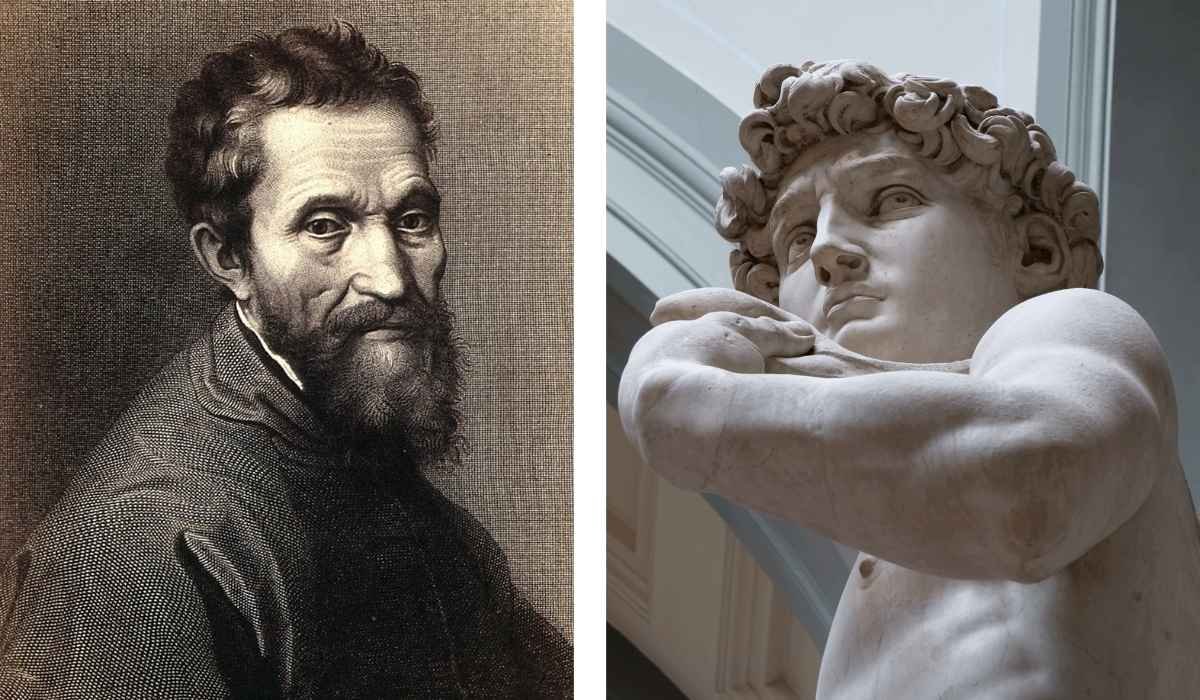
The remarkable journey of Michelangelo began in the heart of the Italian Renaissance, a period defined by extraordinary cultural growth and artistic renewal. Born in Caprese in 1475, this legendary creative genius transformed the entire landscape of European art through his unrivaled skill in sculpture, painting, and architecture. From his early days under the patronage of the powerful Medici family in Florence to his monumental commissions in Rome, Michelanglo continuously pushed the boundaries of human expression. His unwavering dedication to capturing the raw emotion and anatomical perfection of the human body cemented his status as an immortal titan in art history.
Quick Bio
| Attribute | Details |
| Full Name | Michelangelo di Lodovico Buonarroti Simoni |
| Birth Date | March 6, 1475 |
| Birth Place | Caprese, Republic of Florence |
| Death Date | February 18, 1564 |
| Key Professions | Sculptor, Painter, Architect, Poet |
| Notable Works | David, Sistine Chapel Ceiling, Pietà |
Early Life and Family Background
The formative years of Michelangelo took place against a backdrop of shifting family fortunes and early exposure to artistic craftsmanship. Born to a local judicial administrator in a small Tuscan town, he was soon brought back to Florence where his true passions began to take shape. Despite his father initially resisting a career in the arts, the young apprentice found solace in local workshops and churches. Immersed in the vibrant cultural community of Florence, Michelangelo absorbed every technique possible, setting the foundational groundwork for a lifelong pursuit of creative excellence that would eventually redefine the entire cultural trajectory of Western civilization.
Apprenticeship Under Domenico Ghirlandaio
Entering the bustling workshop of Domenico Ghirlandaio at a young age marked a critical turning point for Michelangelo. Under the guidance of this master fresco painter, the ambitious teenager learned the intricate rules of perspective, composition, and color application. Although his tenure in the workshop was relatively brief, the practical skills he acquired proved invaluable for his later large-scale painting projects. Michelangelo quickly demonstrated a level of talent that astonished his peers and teachers alike, signaling that his artistic ambitions extended far beyond standard workshop training and standard decorative practices of the late fifteenth century.
Influence of the Medici Court
The patronage of Lorenzo de Medici provided Michelangelo with unprecedented access to classical antiquity and intellectual discourse. Within the magnificent sculpture gardens of the Medici palace, the young artist studied ancient Roman artifacts and engaged with leading humanist philosophers. This intellectual environment profoundly shaped Michelangelo worldview, instilling a deep appreciation for classical forms and heroic human anatomy. Surrounded by poets, scholars, and fellow visionaries, Michelangelo refined his unique aesthetic philosophy, merging classical idealism with intense psychological depth that would characterize all his future masterpieces in marble and stone.
The Creation of the Pietà
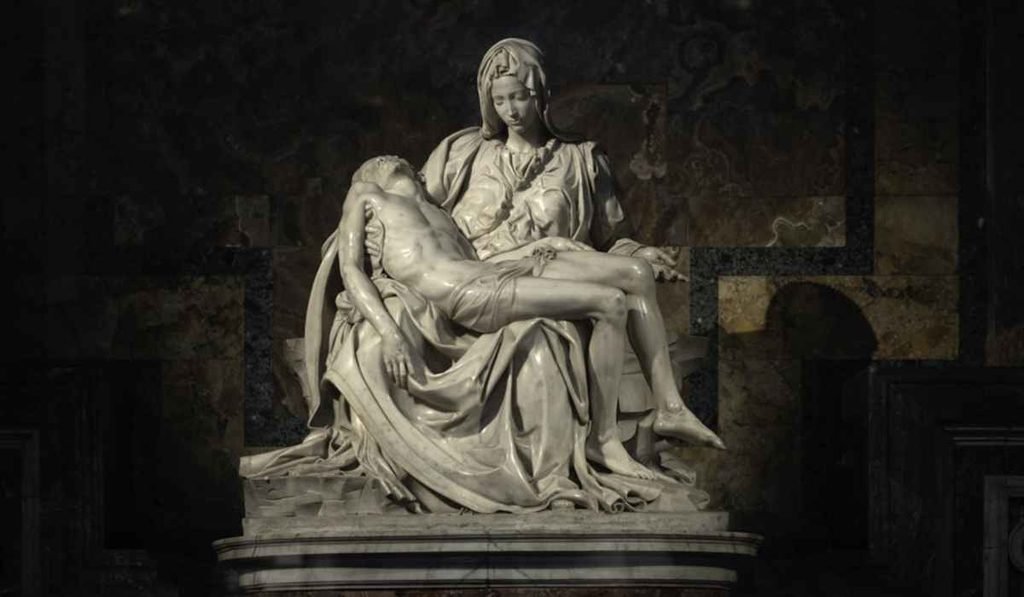
Relocating to Rome in his early twenties allowed Michelangelo to create one of his most breathtaking and emotionally resonant masterpieces. The Pietà, carved from a single slab of pristine Carrara marble, portrays the Virgin Mary holding the lifeless body of Jesus Christ. The astonishing fluidity of the drapery and the delicate tenderness etched into Mary’s youthful face stunned contemporary observers and established Michelangelo as a master sculptor of unmatched capability. This monumental achievement catapulted Michelangelo to widespread fame across Italy, proving that a young artist from Florence could rival and even surpass the celebrated sculptors of classical antiquity.
Sculpting the Monumental Statue of David
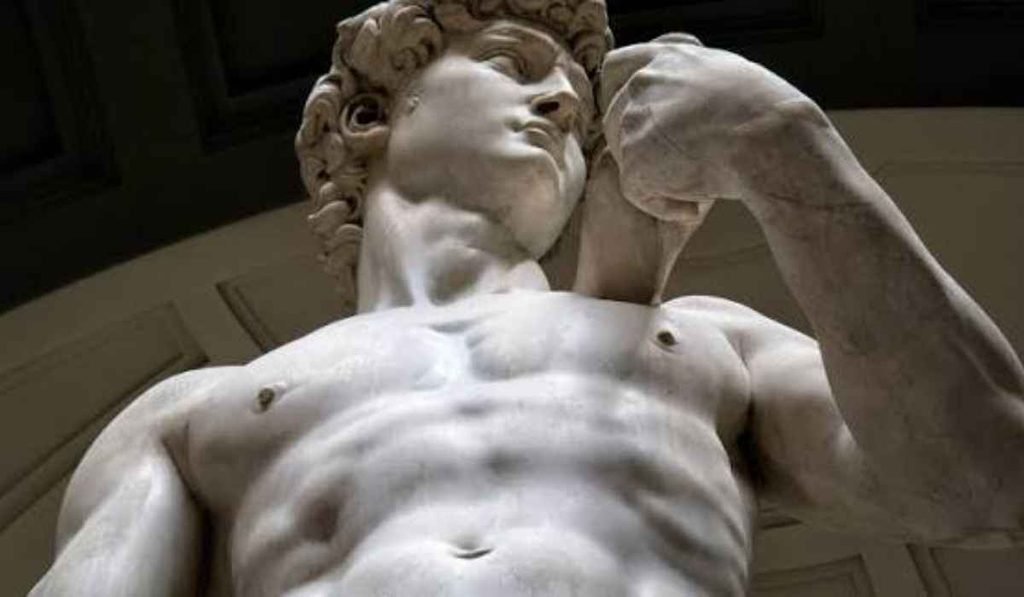
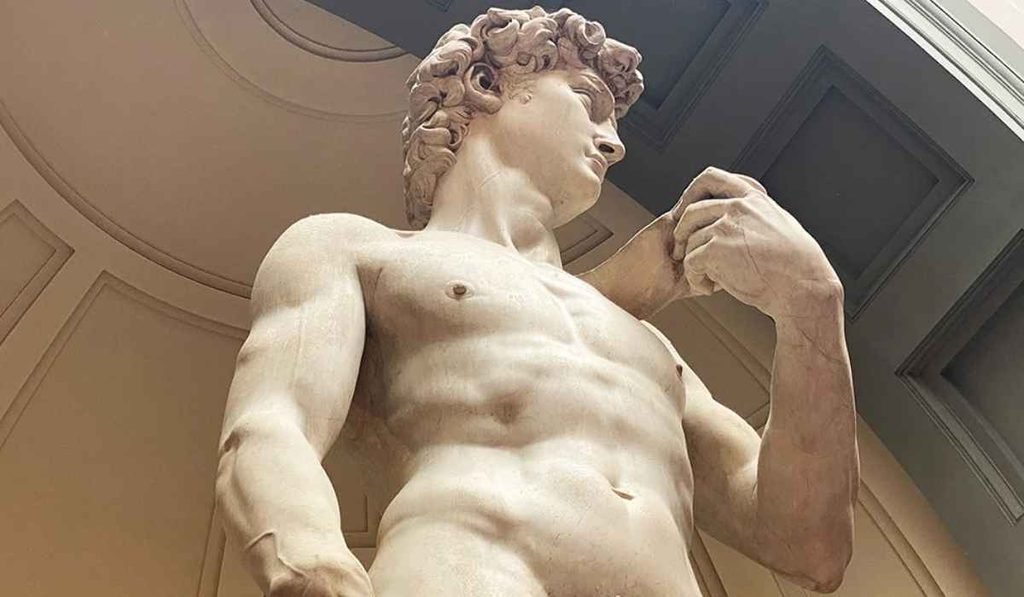
Returning to his beloved Florence, Michelangelo undertook a massive block of flawed marble that other artists had previously abandoned. Over the course of several years, he liberated the towering figure of David from the stone, creating a timeless symbol of civic liberty and human strength. The incredible attention to anatomical detail, from the tense veins in the hands to the focused gaze of the biblical hero, showcased Michelangelo absolute mastery of physical form. Standing over seventeen feet tall, the statue of David remains an enduring icon of Renaissance achievement and a high-water mark in the history of global sculpture.
Commission for the Sistine Chapel Ceiling
Pope Julius II summoned Michelangelo to Rome to undertake a daunting architectural and painting project that tested the artist physical endurance. Painting the vast ceiling of the Sistine Chapel required Michelangelo to spend years working in uncomfortable positions beneath the chapel vault. Despite initially protesting that he was a sculptor rather than a painter, Michelangelo produced a breathtaking narrative cycle depicting scenes from Genesis, including the iconic Creation of Adam. This monumental fresco cycle revolutionized Western painting, introducing dynamic poses, vibrant colors, and profound theological themes that continue to captivate millions of visitors today.
Architectural Genius and Design Innovations
Beyond his triumphs in painting and sculpture, Michelangelo made revolutionary contributions to Renaissance architecture. His design for the Laurentian Library introduced playful yet sophisticated manipulations of classical elements, effectively pioneering the Mannerist architectural style. Later in life, Michelangelo assumed responsibility for completing St. Peter’s Basilica, where he engineered the magnificent soaring dome that still dominates the skyline of Rome. Through these architectural endeavors, Michelangelo proved his capacity to shape physical space on a grand scale, combining structural integrity with breathtaking aesthetic beauty and monumental grandeur.
The Last Judgment Fresco
Decades after completing the ceiling, Michelangelo returned to the Sistine Chapel to paint The Last Judgment on the altar wall. This vast and complex composition reflects a more somber and turbulent tone, capturing the dramatic separation of souls on the day of divine reckoning. The swirling masses of distorted human figures demonstrated Michelangelo willingness to break away from classical harmony in favor of intense emotional expression and psychological tension. As one of the most ambitious frescoes ever created, The Last Judgment remains a powerful testament to the evolving artistic vision of Michelangelo during his later years.
Poetry and Literary Expression
In addition to his visual arts, Michelangelo possessed a profound talent for writing lyrical poetry and sensitive sonnets. His surviving poems explore deep themes of spiritual yearning, unrequited love, the burdens of artistic creation, and mortality. Written primarily as personal reflections or shared with close friends, these verses reveal a deeply introspective side of Michelangelo that complemented his monumental public works. Through his poetry, Michelangelo expressed the philosophical anxieties and creative struggles of a genius trying to capture divine perfection through fragile human mediums.
Rivalry with Contemporary Masters
The artistic landscape of the High Renaissance was defined by intense competition, notably between Michelangelo and other luminaries like Leonardo da Vinci. Operating in the same cultural hubs, these two titans represented contrasting approaches to art, with Michelangelo emphasizing sculptural power and human anatomy, while Leonardo focused on sfumato and atmospheric nuance. Although their personal relationship was often strained by mutual professional rivalry, this competitive dynamic pushed both men to achieve unprecedented artistic heights. History views their simultaneous presence as a miraculous convergence of creative talent that permanently transformed global culture.
Patronage and Papal Relationships
Navigating the volatile political climate of the Renaissance required Michelangelo to maintain complex relationships with various popes and rulers. His interactions with patrons like Pope Julius II and Pope Clement VII were famously stormy, marked by fiery artistic disagreements and dramatic departures. Despite these frequent conflicts, mutual respect usually prevailed, resulting in some of the most important commissions in Western art history. Michelangelo ability to negotiate demanding patrons while maintaining his artistic integrity ensured that his creative vision remained uncompromised throughout his long and prolific career.
Mastery of Anatomy and Dissection
To achieve such lifelike representations in his sculptures and paintings, Michelangelo engaged in rigorous anatomical studies. Working closely with church hospitals, he conducted human dissections to thoroughly understand muscle structures, bone formations, and vascular systems. This scientific approach gave Michelangelo an intimate knowledge of the human body that set his work apart from many contemporaries. By combining empirical observation with profound artistic intuition, Michelangelo was able to imbue cold marble and static paint with a convincing sense of breath, movement, and emotional vitality.
The Concept of Terribilità
Contemporaries frequently described Michelangelo using the term terribilità, a word denoting his awe-inspiring intensity, fierce temperament, and formidable presence. This intense emotional force was not only evident in his fiery personality but also translated directly into the powerful energy of his artwork. Figures created by Michelangelo often exude a brooding tension and monumental strength that command immediate attention and respect. This unique psychological intensity became a defining hallmark of his style, inspiring generations of subsequent artists who attempted to capture his dramatic flair.
Transition into Mannerism
The deeply personal and expressive style developed by Michelangelo in his later years laid the groundwork for the artistic movement known as Mannerism. Younger artists, overwhelmed by the perfection of High Renaissance ideals, began to imitate Michelangelo emotional intensity, elongated proportions, and complex twisting poses. Works like the Medici Chapel sculptures reflect this stylistic evolution, moving away from strict naturalism toward subjective emotional resonance. Through this stylistic shift, Michelangelo single-handedly bridged the gap between the Renaissance and the subsequent development of Baroque art in Europe.
Personal Life and Solitude
Despite achieving immense fame and financial security during his lifetime, Michelangelo lived a famously austere and solitary existence. He often neglected his personal comfort, working tirelessly through the night with little regard for food or sleep while immersed in his creative projects. His deep devotion to his craft left little room for domestic life, and he maintained few close personal relationships outside of a trusted circle of family members and intellectual confidants. This relentless dedication was the driving force behind a prolific output that spanned nearly eight decades of continuous artistic production.
Legacy in Western Art History
The cultural footprint left by Michelangelo extends far beyond the borders of Italy, influencing centuries of Western painters, sculptors, and architects. His masterpieces became the ultimate benchmark for artistic achievement, studied and copied by aspiring creators for generations. Museums and galleries worldwide continue to treasure his surviving drawings, letters, and finished monuments as priceless cultural artifacts. The enduring fascination with Michelangelo proves that his unique ability to translate human suffering, triumph, and aspiration into physical form speaks universally across time and cultural boundaries.
The Final Years in Rome
During his final decades in Rome, Michelangelo focused heavily on architectural projects and religious devotion, reflecting a mature and contemplative mindset. He continued to design buildings, write deeply spiritual poetry, and carve late sculptural works, such as the Rondanini Pietà, with trembling hands. Even into his late eighties, his creative drive remained entirely undiminished, working almost until the very day of his death in 1564. His passing marked the end of an extraordinary era, prompting profound mourning across Italy and cementing his eternal status as a cultural immortal.
Historical Documentation and Biographies
Unlike many historical figures, Michelangelo lived to see his own life meticulously recorded by biographers who recognized his singular genius. Giorgio Vasari and Ascanio Condivi published detailed accounts of his career while he was still alive, ensuring that his artistic triumphs and personal quirks were preserved for posterity. These historical texts, combined with a massive surviving collection of personal letters and preliminary sketches, provide modern scholars with unprecedented insight into his creative process. This rich documentation allows contemporary admirers to appreciate the intricate details of Michelangelo life and career.
Enduring Cultural Impact Today
Today, the name Michelangelo remains synonymous with the absolute peak of human artistic achievement and creative ingenuity across the globe. Millions of tourists flock to Florence and Vatican City annually to witness his iconic statues and breathtaking ceiling frescoes in person. His influence permeates popular culture, literature, and modern design, proving that his visionary creations are just as relevant today as they were during the fifteenth century. For comprehensive academic insights into his incredible historical journey, one can explore the detailed overview available.
FAQs
- When was Michelangelo born and where did he grow up?
- Michelangelo was born on March 6, 1475, in Caprese, Italy, and grew up largely in Florence.
- What are some of the most famous works created by Michelangelo?
- His most celebrated masterpieces include the statue of David, the Pietà, and the Sistine Chapel ceiling.
- Did Michelangelo consider himself primarily a painter or a sculptor?
- He always considered himself first and foremost a sculptor, despite his monumental achievements in painting.
- Who were the major patrons that supported Michelangelo throughout his career?
- Key patrons included the powerful Medici family of Florence and various Roman popes, notably Julius II.
- When did Michelangelo pass away and where did he spend his final years?
- He passed away on February 18, 1564, spending his final decades living and working in Rome.